
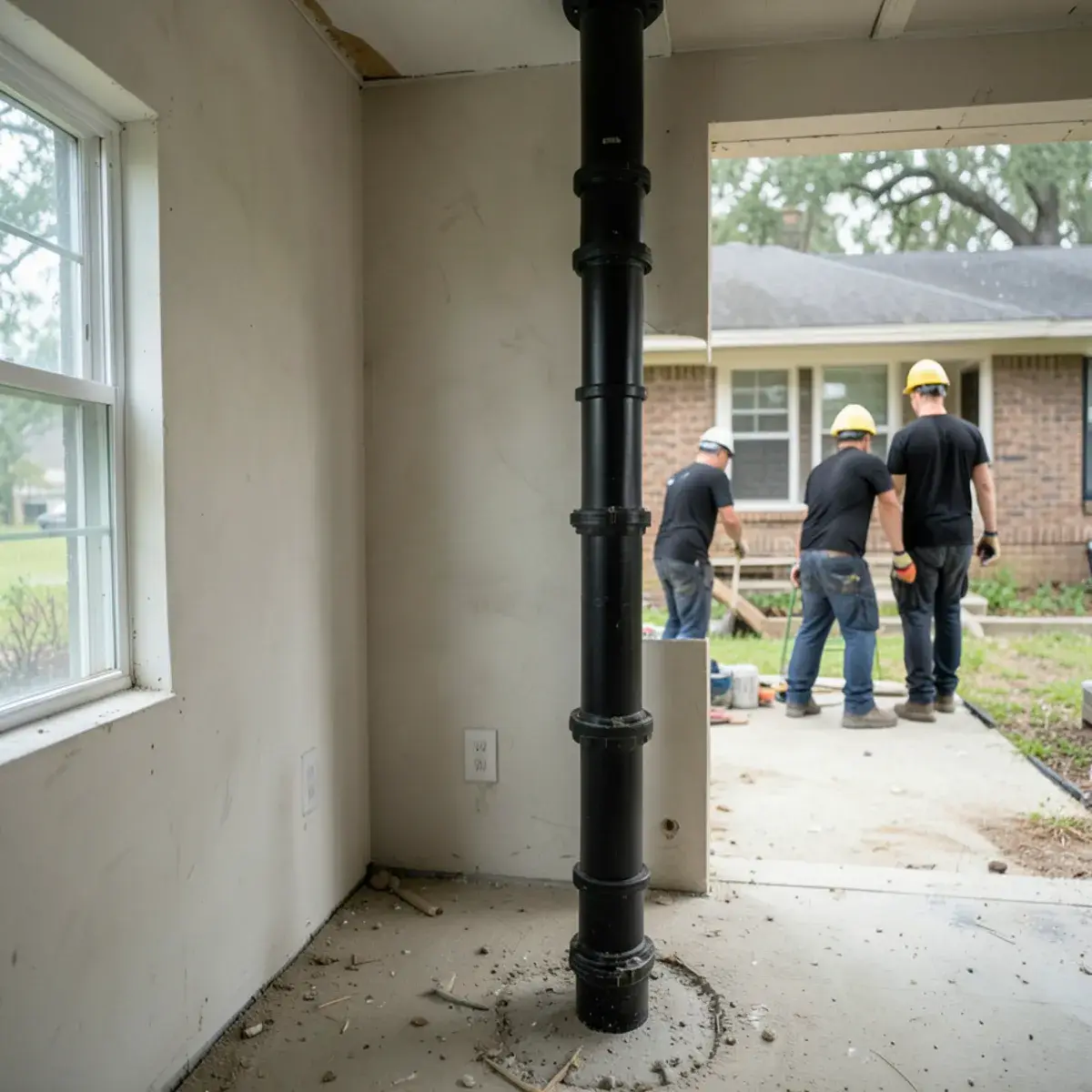
By the PipeElectric team · Published October 30, 2026 · Updated October 30, 2026
Cast iron pipe replacement in Houston should follow what a sewer camera shows, not the age of the house alone. Some old cast iron still drains well. Other runs have thinned, cracked or scaled over until they clog every few months. Your job is to find out which kind you have before anyone quotes a full replacement.
How can you tell if your drains are cast iron?
Check the pipes you can reach, because the visible stack usually matches the hidden run. Look in these places:
- Under the kitchen or bathroom sink where the drain enters the wall
- At cleanouts in the garage or along an exterior wall
- At the vent stack if you have attic access
- At any wall opened during a past remodel
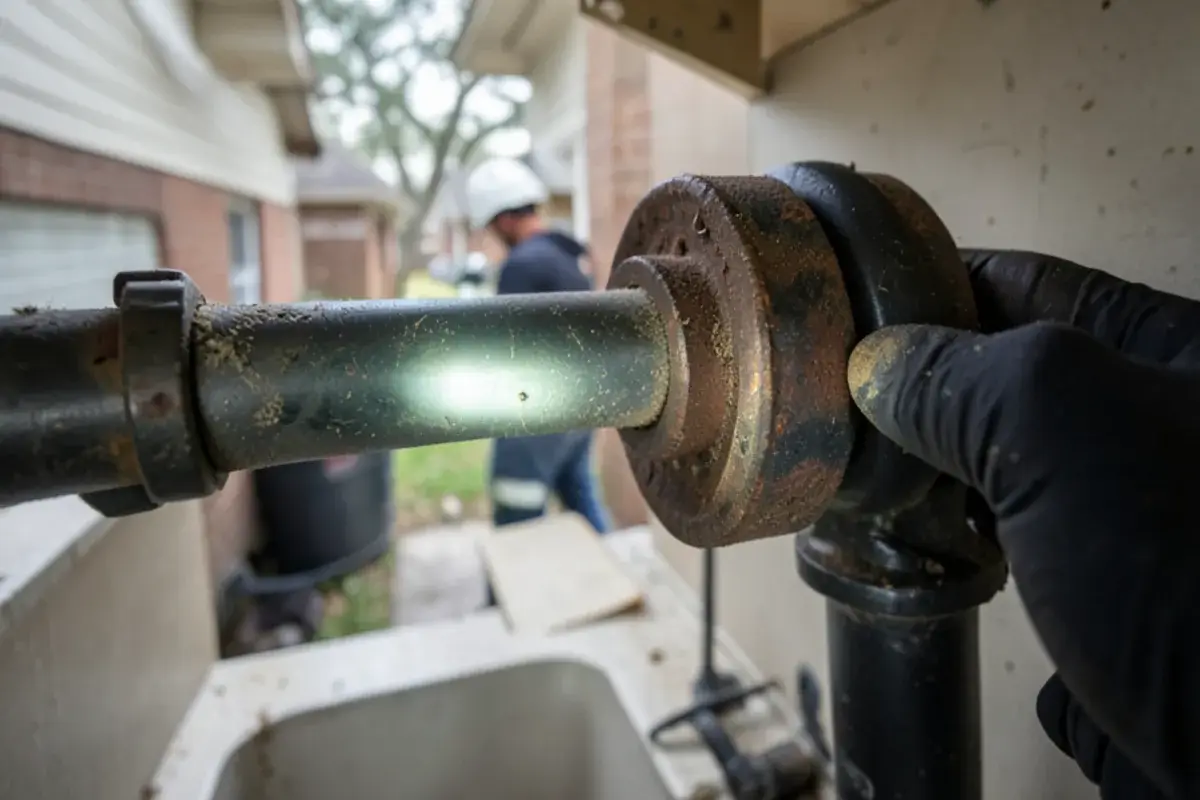
Cast iron is heavy, dark and rough, and a magnet sticks to it. Older runs often have bell-shaped hubs at the joints. Newer no-hub joints use a band clamp. White or black plastic at the fixture does not settle the question, because an old drain may have been tied into new plastic at the wall.
Same drain clogging every few months? Get a look inside the pipe.
- ★ 5.0 on Google, 18 reviews
- Sun–Thu 7 AM–8 PM · Fri 7 AM–6 PM · Sat closed
- Clear, upfront quote
Why does cast iron wear out?
Cast iron wears out from the inside, so the outside can look fine while the wall thins. Two processes do most of the work. Water reacting with bare iron dissolves metal and forms rough deposits called tubercles, which narrow the pipe. In sewer lines, microbes produce acidic gases such as hydrogen sulfide that attack the inner wall, especially near the top of the pipe.
Both are described in the Wikipedia entry on cast iron pipe, which also notes that continued iron loss reduces wall thickness over time. For a homeowner, that means three symptoms:
- Rough walls snag paper and grease, so clogs repeat
- Thin walls crack under ground movement
- Cracked sections leak into the soil under the slab
Houston adds a fourth stress. Expansive clay flexes the slab, and old rigid joints handle that poorly. If your home shows both drain trouble and floor cracks, read how clay soil breaks plumbing under your slab.
This Old House's March 2026 sewer guide lists cast iron at 75 to 100 years with proper care. Treat that as an upper mark. Iron under a Houston slab sits in damp, moving clay, so one run can fall well short of it while another outlasts it.
Does every older Katy home have cast iron?
No. Katy is younger than most people assume once you leave the original town. The city was incorporated in 1945, Interstate 10 opened in 1966, and the 1970s and 1980s brought subdivisions such as Memorial Parkway and Nottingham Country. Most of the growth since then is newer still, and much of Greater Katy sits outside the city limits.
That means the odds change by neighborhood:
- Old Towne Katy and early subdivisions: worth checking for cast iron
- 1990s and newer Greater Katy: plastic drains are far more likely
- Inner Houston and neighborhoods like West University Place: older housing stock, though many lots have been rebuilt
Age gives you a reason to look, and it stops there. A remodel may have replaced part of the system, so one home can hold both materials.
Where do iron drains fail first?
Horizontal runs usually fail before vertical stacks, because water and solids stay in them longer. A stack dries between flushes. A flat run keeps a wet channel along its bottom and gases in the crown above it, so the iron thins at both.
The bottom can wear into a long open slot, which the trade calls channeling. A plumber checks these spots first:
- The kitchen branch, which takes hot water and grease every day
- Runs under the slab, which stay damp year-round
- Old hub joints, packed with oakum and lead that will not flex
- The point where the line leaves the slab edge and meets moving soil
- Past repairs, especially couplings with no metal shield
Channeling is why a first camera pass can mislead. Standing water and buildup hide the bottom of the pipe, so the worst damage may only show once the line is clean.
What does a sewer camera decide?
A sewer camera decides how much pipe needs work. Ask for the video, and ask where each problem sits along the line. Here is how findings usually map to action:
| Camera finding | What it means | Typical next step |
|---|---|---|
| Light scale, round pipe, good slope | Normal aging | Clean gently, recheck in a few years |
| Heavy scale in one stretch | Flow restricted, wall still present | Clean, then re-inspect the bare wall |
| One crack or broken hub | Local failure | Section repair |
| Holes, flaking or missing pipe wall | Advanced corrosion | Replace the run |
| Sagging belly | Lost slope, often soil movement | Re-lay that section |
| Roots at several joints | Joints open along the line | Compare repair against replacement |
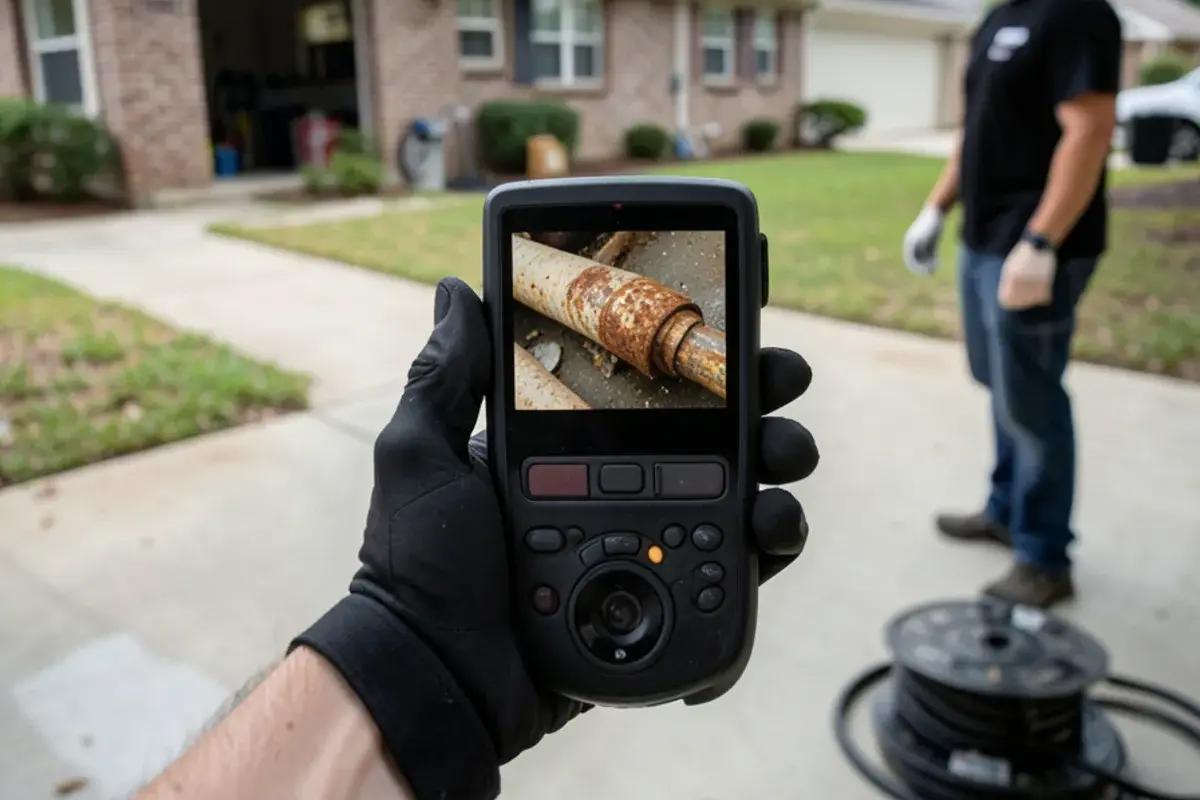
A sewer camera inspection before cleaning can miss defects hidden by buildup. Before hard cleaning, it shows whether the pipe can take it. Good inspections often include both passes.
What are your cast iron pipe replacement options in Houston?
Your options depend on where the bad pipe sits and what is above it. Each carries a trade-off:
- Section repair: Cut out the failed length and tie in plastic. Lowest disruption, but the rest of the old pipe stays.
- Full run under the slab: Trench or tunnel to reach it. Most complete, and the most floor and foundation work.
- Reroute: Abandon the old drain and run new pipe a different way where slope allows. Limited by layout, since drains need steady fall.
- Lining: Form a new inner pipe inside the old one. Needs enough sound host pipe and a correct slope.
Bob Vila's guide, updated in January 2024, put sewer line repair or replacement at $60 to $250 per linear foot. Treat that as a national market number, and not as a PipeElectric price. Flooring, trench length and access move a real job far more than the footage alone. PVC is now the most common drain material, according to Wikipedia's drain-waste-vent entry, which also notes that cast iron parts and skilled labor have become scarcer.
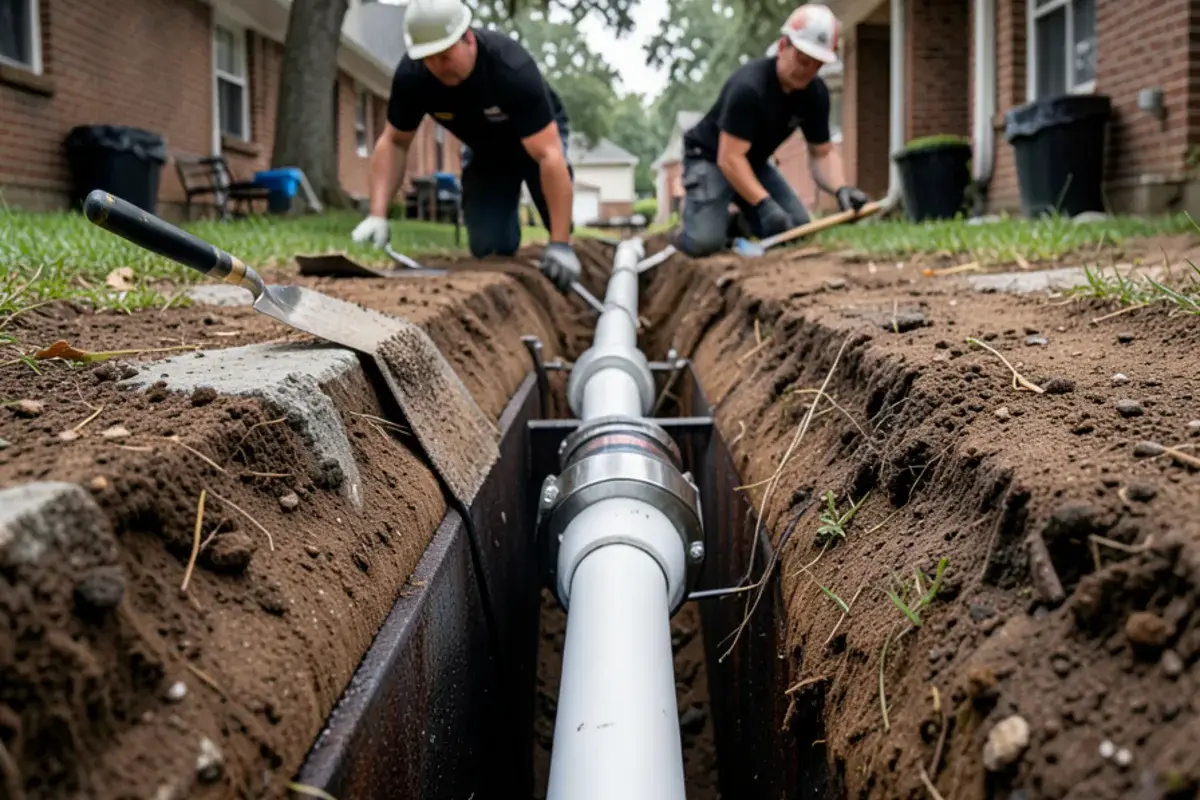
Drain work and supply work are separate decisions. A whole house repipe replaces supply lines, while sewer line repair covers the drains and main line. Make sure any quote says which one it covers.
What does replacing a section under the slab involve?
Expect noise, dust and a stretch of time without that drain. A typical under-slab section goes in this order:
- Mark the run on the floor from the camera's locator reading.
- Confirm the slab type, protect the room and contain the dust.
- Saw out the concrete and dig down to the pipe.
- Cut out the old iron and support the ends that remain.
- Lay new pipe at the right slope, then join it with shielded couplings.
- Test the new work with water, and get any required inspection before covering it.
- Backfill in layers, pour the patch and restore the floor.
Flooring is usually a separate trade, so ask who owns that last step. Tunneling in from outside leaves the floor alone, but it takes more digging and labor.
What does our team look at before suggesting replacement?
Our team looks at the pattern first. One bad joint in an otherwise sound line rarely justifies a slab-wide job. Repeat clogs in several branches tell a different story.
Three questions help any homeowner weigh a recommendation:
- Can you show me the worst spot and the best spot on the video?
- Where exactly is the damage measured from the cleanout?
- What happens if I repair this section and leave the rest?
A straight answer to the third question is the useful one. Good advice names what the cheaper option leaves at risk.
What is the next step for an older drain?
Get the inside of the pipe on video before you decide anything. If it looks sound, keep the footage as a baseline. If it does not, you will have the location and length needed to compare repair against replacement. Call us with your home's age and what the drains are doing, and we can talk through whether a camera is the right first step.
Common questions
Can cast iron drains be repaired instead of replaced?
Yes, when the damage sits in one section and the pipe on both sides is sound. A plumber cuts out the failed length and joins new plastic pipe to the old iron with a shielded coupling. This is a poor fit when a camera shows the same thinning along the whole run, since the next section is likely to fail soon after.
Is hydro jetting safe for cast iron?
It depends on the condition of the pipe, which is why a camera should go in first. Bob Vila's cost guide warns that older plumbing is prone to jetting damage and lists certain cast iron among the vulnerable materials. Sound pipe with heavy buildup may handle it. Thin or cracked pipe usually needs repair before anyone cleans it hard.
How long do cast iron drain pipes last?
Decades, though the range is wide. This Old House's March 2026 guide lists 75 to 100 years with proper care, while drains under a Houston slab can fail sooner because they sit in damp, shifting clay. Age only tells you when to look. A camera shows how much wall is left and where the worst section sits.
Should I replace cast iron before selling my house?
Usually not without evidence. Get a sewer camera inspection first and keep the video. If the line is sound, the footage answers the buyer's question. If a section has failed, a targeted repair with paperwork may serve you better than a full run, since a Houston buyer will likely want to see inside the pipe anyway.
Older drains backing up again? Call and ask what a camera could settle.
- ★ 5.0 on Google, 18 reviews
- Sun–Thu 7 AM–8 PM · Fri 7 AM–6 PM · Sat closed
- Clear, upfront quote
Written by the PipeElectric team
PipeElectric is a Houston plumbing company with 18 Google reviews and a 5.0 rating. Read about us.