
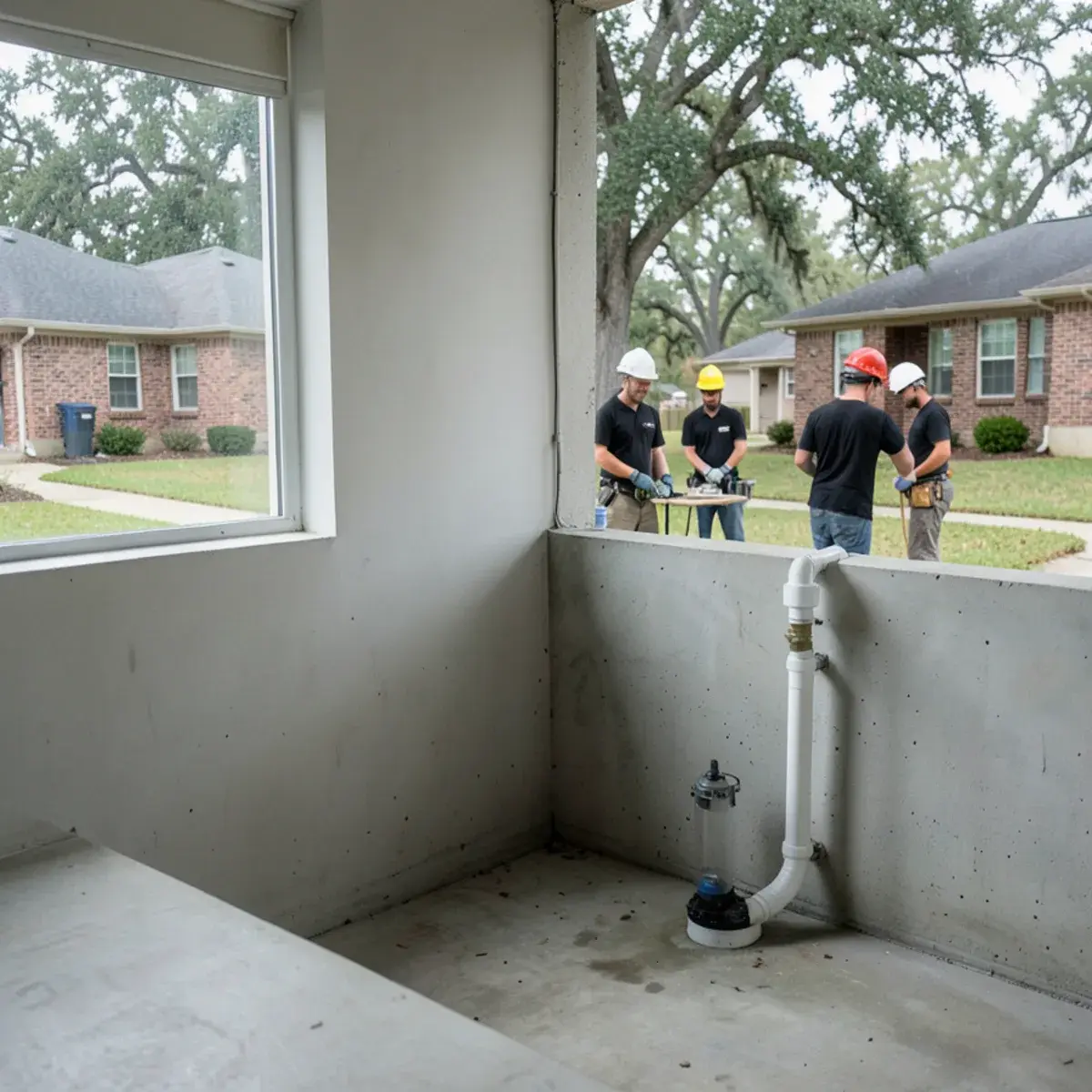
Sump pump service in Houston is a smaller, more specific job than the national advice suggests, because most homes here sit on slabs with no basement. A pump earns its place in a low garage, a wet crawlspace or a yard that holds water. If your slab home stays dry between storms, you probably do not need one.
Who actually needs a sump pump in Houston?
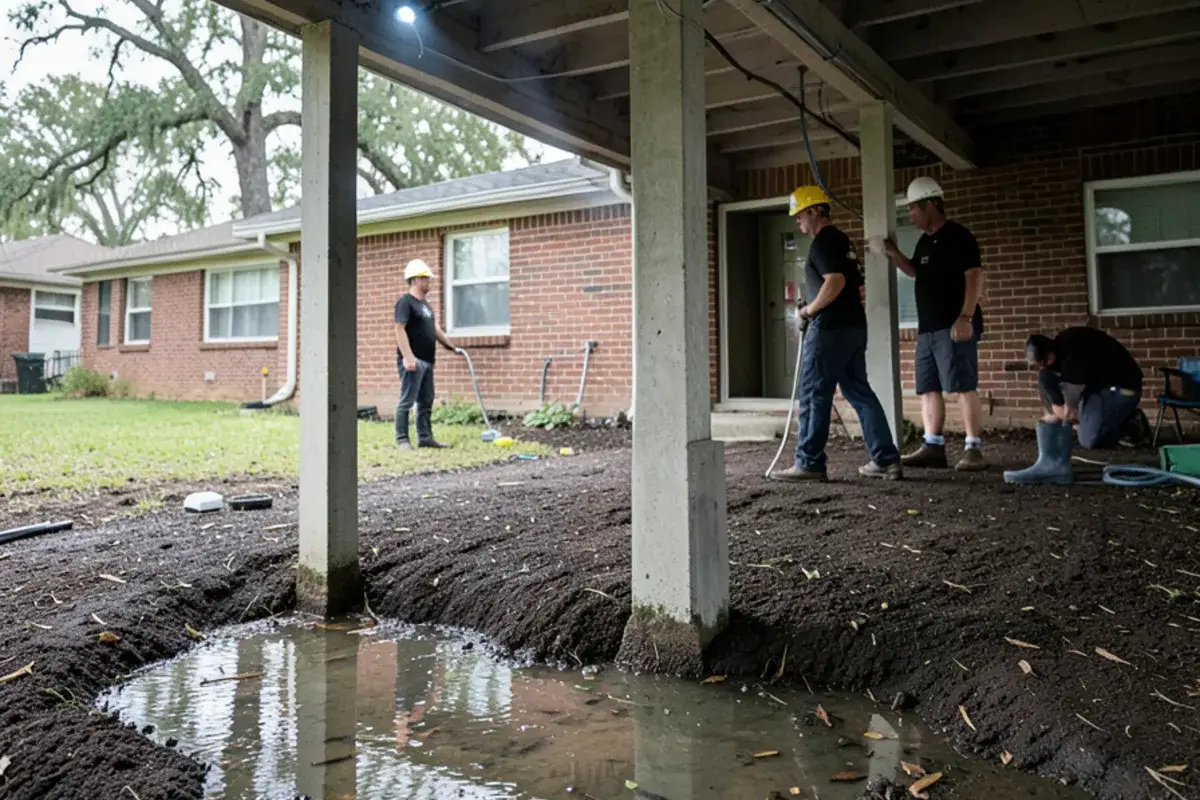
You need one when water keeps collecting somewhere gravity cannot drain it. Basements are rare here, so if you searched for a basement flooding pump, most of what you read was written for other climates. These are the Houston situations where a pump makes sense:
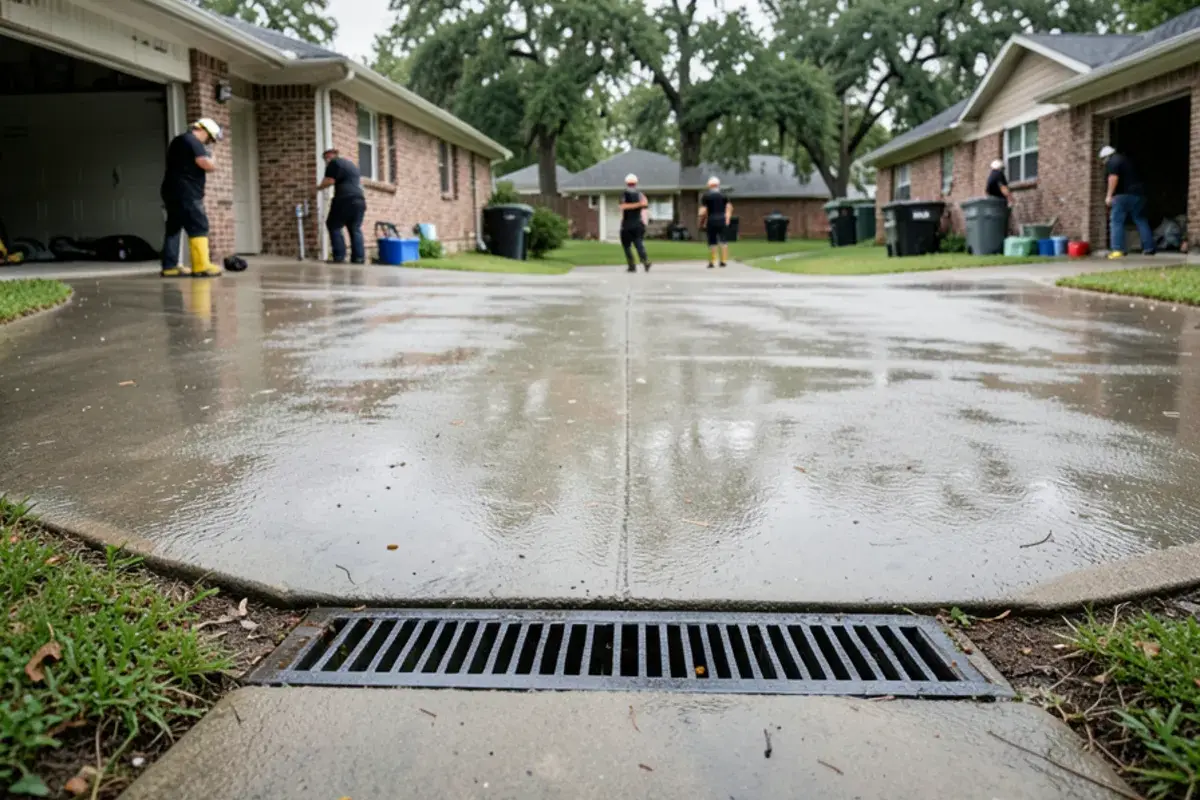
- Low or sunken garages, where a driveway slopes back toward the door
- Pier-and-beam crawlspaces that hold water after rain
- Below-grade rooms or patios, including stairwells and elevator pits
- Yards with a low spot and no fall to the street or a ditch
- Flood-prone lots where the house was raised, and water lingers underneath
You probably do not need a pump if:
- Your slab home stays dry except in a declared flood
- Water only shows up when the street itself is under water
- The real problem is a downspout or a grade that a drain could fix
- The water coming up is sewage, which calls for sewer backup service
We would sooner tell you that than sell you a pump.
Not sure a pump is the answer? Describe where the water sits and we will say so.
- ★ 5.0 on Google, 18 reviews
- Sun–Thu 7 AM–8 PM · Fri 7 AM–6 PM · Sat closed
- Clear, upfront quote
Why does water sit around Houston foundations?
Rain and clay do most of it. NOAA climate normals put the area's rainfall near 53 inches a year, and tight clay soil absorbs it slowly, so water stays on the surface or perches in shallow low spots.
Flat ground makes it worse, because many lots have little fall toward a street or bayou. The Flood Control District's final Harvey report counted 154,170 flooded homes in Harris County, and a little under half sat outside both the 100-year and 500-year floodplains, according to Community Impact. A map zone tells you less than your own lot's history does.
The City's Chapter 19 rules point to a local twist. Since April 2018, new and substantially improved buildings in the 500-year floodplain must sit two feet above that flood elevation, and piers and open foundations are one accepted route. More raised houses mean more crawlspaces that need to stay dry. Check with the City's floodplain office before changing anything under a raised home.
Which sump pump installation fits the site?
Pick the pump by where it sits and how much it must lift.
| Option | Best for | Strength | Trade-off |
|---|---|---|---|
| Submersible pump | Garage pits, trench drains | Quiet, sits out of sight | Harder to reach for service |
| Pedestal pump | Tight, dry-sided pits | Motor stays above water | Louder, sits in the open |
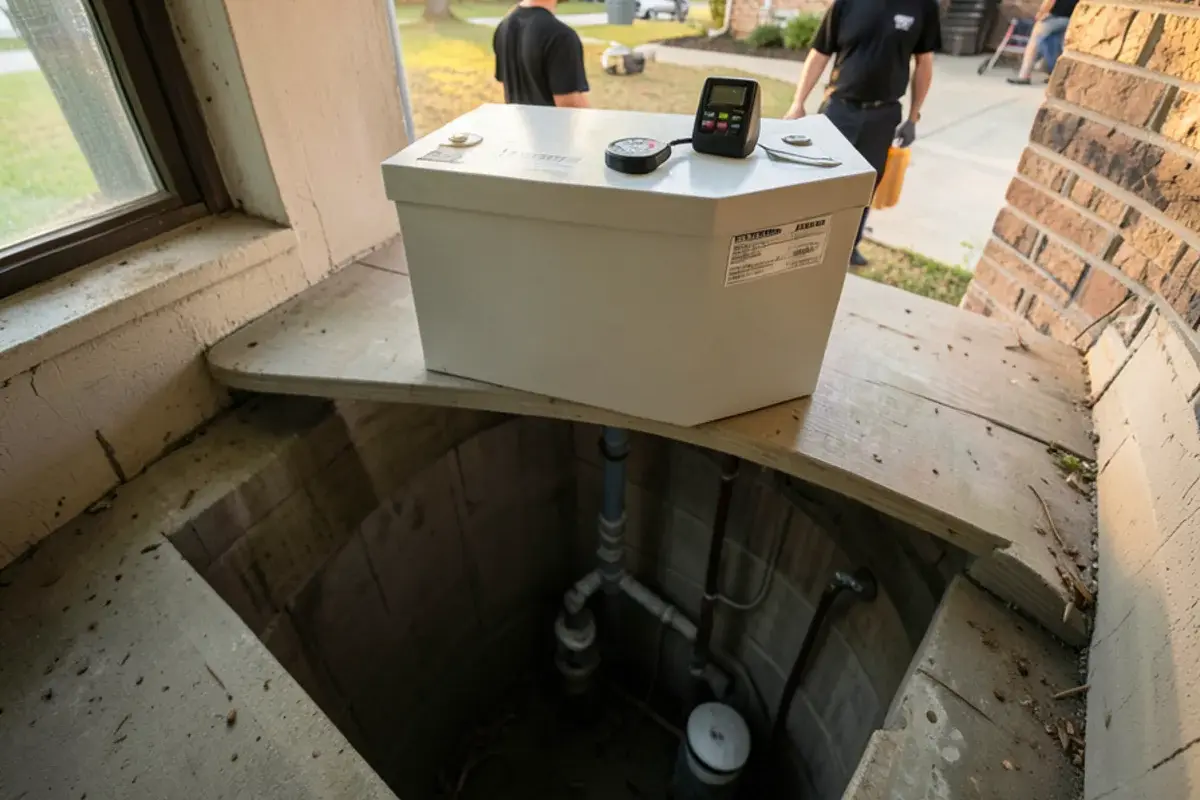
| Battery backup | Sites that cannot lose a pump | Runs through an outage | Lower flow, battery upkeep |
| Water-powered backup | Rarely a fit | Needs no electricity | Uses city water, needs a backflow check |
| Crawlspace package pump | Pier-and-beam homes | Low pit, low profile | Tight working space |
Materials count in a Houston garage or crawlspace. Choose a cast or stainless body, a sealed lid to keep out debris and pests, and a check valve so pumped water does not fall back into the pit.
A pump is only part of the answer. In many yards, a drain cleaning of the existing outlet or a simple surface drain solves the problem at lower cost.
How do you size a sump pump and plan the discharge?
Size for the water you see and the height it has to climb. Sizing is a calculation, so a bigger motor is not automatically better, since an oversized pump short-cycles and wears out faster.
Work through these decisions:
- Inflow: time how fast the pit or low spot fills during real rain
- Lift: the vertical climb from pit to outlet, plus friction in the pipe
- Pit size: big enough to stop rapid on-off cycling
- Power: a dedicated, protected outlet near the pit
- Discharge point: somewhere that drains, with no erosion or slick walkways
The discharge point deserves the most thought in Houston. Texas Water Code Section 11.086 bars diverting surface water in a way that damages another person's property, so a pipe aimed at a neighbor's fence is a legal problem as well as a drainage one. Many cities also bar sump water from sanitary sewers. Confirm the local rule with the city before connecting to any drain.
How a sump pump installation or replacement goes
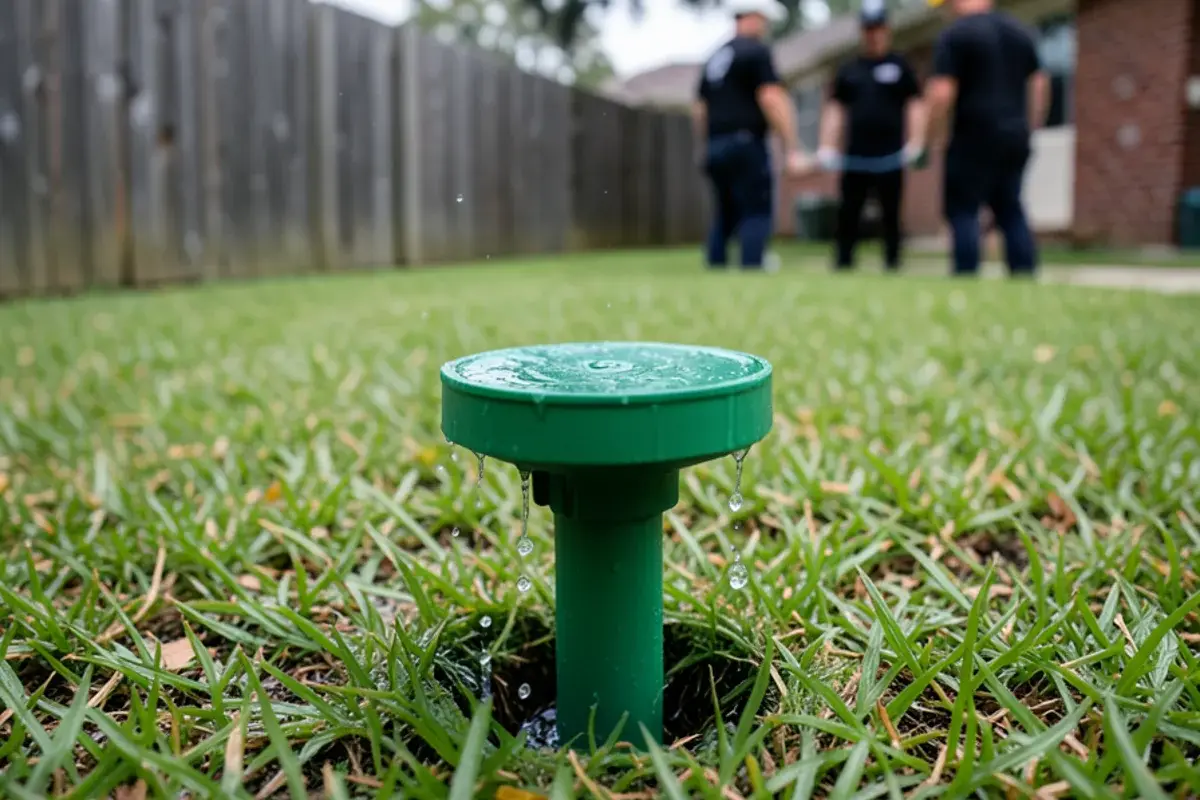
A sump pump replacement in an existing pit is a short job. A new installation takes more, because it may involve cutting concrete and trenching a discharge line. The order looks like this:
- Walk the site with you and find the water's source.
- Decide whether a pump, a drain or a grading fix is the better answer.
- Give you a clear, upfront quote.
- Cut or clean the pit, set the basin, and install the pump and check valve.
- Run the discharge to its approved end point, then test a full cycle at least twice.
- Show you how to test it yourself.
What this work includes:
- Source check and sizing
- Pump, check valve and piping
- Discharge line routing
- A wet test, with the pump cycling on and off
- Care instructions
A replacement covers the pump, the float and the check valve, and often the first run of pipe, because a new pump on a clogged discharge fails the same way. A new install adds the pit, a basin with a sealed lid, and the discharge run. Existing pits get cleaned of silt and gravel before anything goes back in. The discharge line gets a look at every joint and at its outlet, which should sit clear of the foundation and the neighbor's fence. In a crawlspace, the route has to leave room to reach the plumbing above it. The pump is tested on real water, not just by lifting the float. You also hear what a healthy float sounds like and how a failing check valve gives itself away, so trouble gets caught before storm season. Any pit cover gets resealed after the test.
Yard grading and foundation work are separate trades.
What affects the cost of sump pump service?
Site work drives the cost more than the pump itself. We quote after seeing the site, and these are the main factors:
- Pit: existing, or cut into concrete
- Discharge run: short and simple, or a long trench across the yard
- Pump type: primary only, or with a battery backup
- Access: an open garage, or a low crawlspace
- Power: whether an outlet is already there
For sump pump repair, the question is whether the fault is the pump, the float, the check valve or the discharge line. A float or check valve is a modest fix. A worn motor usually means replacement.
Houston sites add their own variables. A saw cut in a garage slab takes longer than a pit in crawlspace soil. Wet clay makes a trench slow to dig and backfill, and a fence, driveway or sidewalk in the route can force a longer run. A battery backup adds a second pump, the battery and a place to mount them.
Which rules touch a sump pump in Houston?
Discharge comes first, under the Water Code section above. We found no Houston ordinance on sump discharge, so ask the city before tying into any drain. State law counts piping that carries "water, other liquid, or gas" as plumbing, so ask whether your discharge line qualifies. Digging counts too: a trench deeper than 16 inches needs an 811 call first, the Railroad Commission of Texas says.
Any new outlet or circuit is work for a licensed electrician, and the Texas Department of Licensing and Regulation oversees that trade. The Texas State Board of Plumbing Examiners handles plumbing licenses, a separate matter.
How do you keep a sump pump ready for storm season?
Test it before you need it, because Houston pumps can sit idle through a long dry spell. North Dakota State University Extension's test works here too:
- Lift the float for about ten seconds and listen for a smooth start
- Pour water in until the float rises, and confirm it cycles at least twice
- Clear debris from the pit with a flashlight in hand
- Walk the discharge line and make sure the outlet is clear
- Test any battery backup by unplugging the main pump, then plug it back in
Do this in spring, before peak hurricane season, and again after any heavy storm. Our hurricane and flood plumbing checks cover the rest of the house.
Why PipeElectric for sump pump service?
A sump pump is a judgment call in Houston, so straight advice matters most.
- A 5.0 rating on Google, with 18 reviews behind it
- Plain explanations, including what a job does not need
- Clean work, which counts in a finished garage
- Fair pricing and a clear, upfront quote once the site has been seen
A pump is easy to oversell in a slab-home city, so the plain answer may be that you do not need one. Phones open at 7 AM, six days a week, and shut off at 8 PM, with Friday ending at 6 PM.
We take sump pump calls across Houston and nearby, including Friendswood, Kingwood, Dickinson and Pearland.
What customers say about our plumbing work
5.0 on Google from 18 reviews, checked October 2026.
“Had PipeElectric install a new water heater, and they did a fantastic job! Fast, professional, and no mess left behind. Highly recommend them for any plumbing work!”
“PipeElectric did a great job! Had a issue with some outlets and a small leak under my sink. They showed up on time, real professional and got everything fixed quick. Prices was fair too. Definitely calling them again if I need anything else!”
“Had a slow kitchen sink. PipeElectric cleared the clog fast. The plumber was friendly and gave useful tips. Great service!”
Sump Pump Service around Houston
- Friendswood · Raised Friendswood houses leave crawlspaces where water lingers after Clear Creek rises.
- Kingwood · Nearby Montgomery County soils hold perched water 15 to 28 inches down, December to April.
- Dickinson · Harvey flooded about 80% of Dickinson, so pumps here suit seepage, not bayou floods.
- Pearland · City guidance names Clear Creek, Hickory Slough, Mary's Creek and Cowart Creek as flood sources.
- League City · Harvey reached 25% of League City homes, so check whether a low garage needs a pump.
- Katy · Katy's April 2016 flood hit Pecan Lane and Avenue D, so check low garages.
- Aldine · Halls Bayou has flooded majorly 14 times since 1989, so yard water needs an outlet.
- Cypress · Wockley soils near Cypress stay saturated 4 to 33 inches down in winter and spring.
Sump Pump Service questions
Does a slab-on-grade Houston home need a sump pump?
Most do not. A slab has no pit below ground to protect, and a pump inside the house cannot stop street water coming through a door. Consider one only if water repeatedly collects at a sunken garage, a below-grade patio or a yard low spot, and gravity drainage cannot carry it off.
Will a sump pump protect my house in a street flood?
No. When the street and yard are underwater, a pump has nowhere to send the water and the flood comes back around it. Harvey flooded 154,170 homes in Harris County, by the Flood Control District's count. A pump handles seepage and runoff, so treat it as drainage and not as flood protection.
Is a battery backup sump pump worth it here?
It is worth it if the pit protects something that would be damaged within hours. Houston's heaviest rain often comes with storms that also take down power, and a standard pump stops the moment power does. Ask for the rated runtime and the pumping rate, since battery units move less water than most primary pumps.
Where is a sump pump allowed to discharge?
Send water to a spot that drains, away from your foundation and off your neighbor's property. Texas Water Code Section 11.086 bars diverting surface water in a way that damages someone else's property. Many cities also bar sump water from sanitary sewers. Check with your city's public works office before tying into anything.
How do I know if my sump pump is failing?
Lift the float for a few seconds and listen. A healthy pump starts at once and runs smoothly. Grinding sounds, a slow float, constant cycling or a pit that fills while the pump runs all point to trouble. A pump that sits unused for months in a dry spell should be tested before storm season.
Can a sump pump stop sewage from coming up my drains?
No. Sewage backup is a sewer problem, so a sump pump does nothing for it. A sump handles clean groundwater and runoff. If drains are gurgling or sewage is coming up at a shower or toilet, stop using water and treat it as a sewer backup, which needs a separate repair.
Water sitting where it should not? Describe where it collects and when.
- ★ 5.0 on Google, 18 reviews
- Sun–Thu 7 AM–8 PM · Fri 7 AM–6 PM · Sat closed
- Clear, upfront quote
PipeElectric - Plumbing & Electrical - HVAC · Houston, TX · (321) 559-0657