
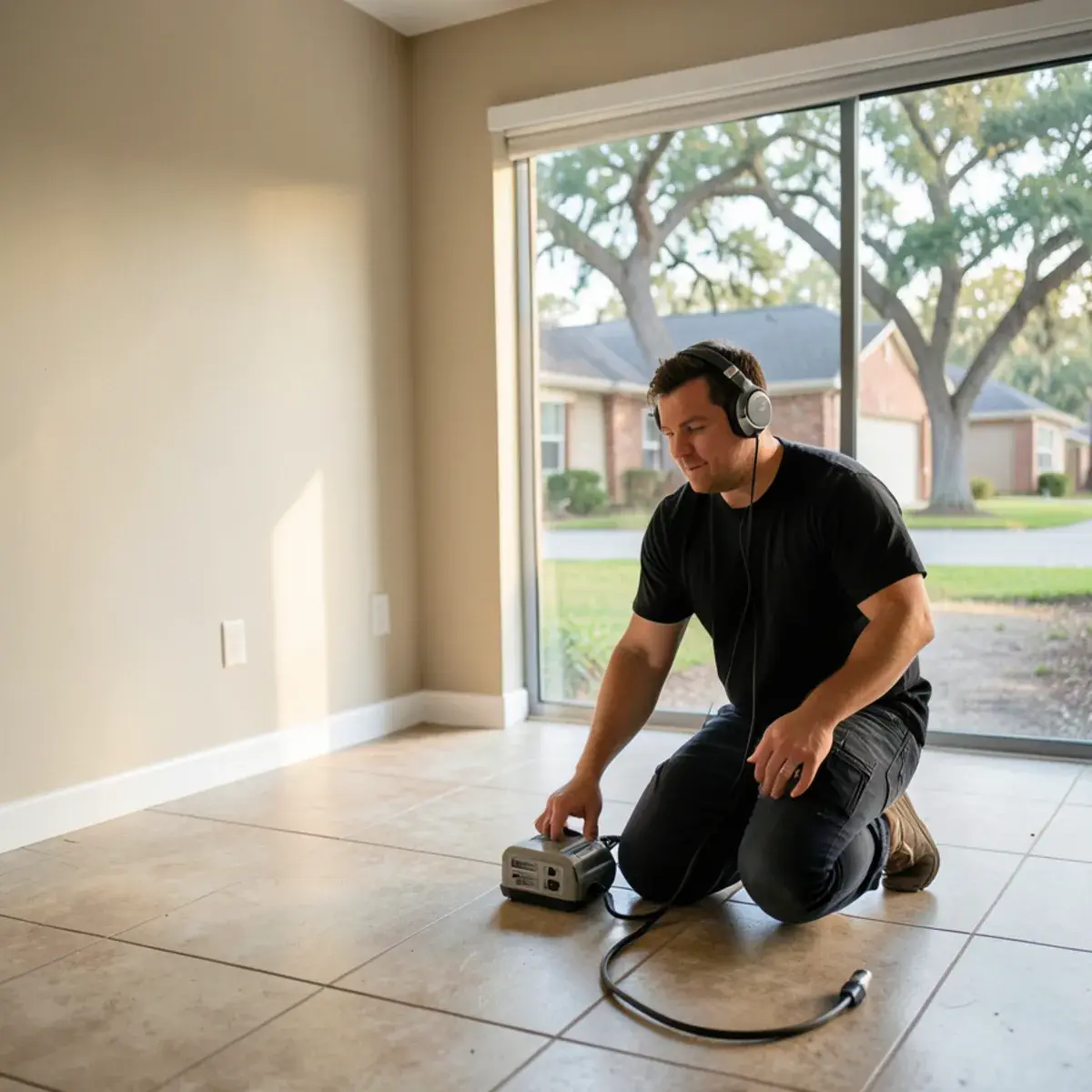
Slab leak repair in Houston starts with finding the exact break in the pipe under your foundation, then fixing it through the slab or rerouting the line around it. Shifting clay soil and aging pipe cause most of these leaks. Shut off the main valve if you see water coming up through the floor, then call us.
What are the signs of a slab leak?
A slab leak usually shows up as a change you can feel, hear or read on a bill before you ever see water. Check for these:
- A warm or hot spot on a tile or wood floor
- The sound of running water with every fixture off
- A water meter that keeps moving when nothing is on
- A water bill that jumps with no change in use
- Damp carpet, cupped wood or lifting tile near an interior wall
- A water heater that seems to run all the time
- New cracks in floors or walls
A warm floor means the hot line. A wet floor with no warmth often means the cold line. That difference matters, because it tells the plumber where to start. The wet spot may also sit well away from the break, since water follows the pipe trench and the underside of the slab before it surfaces.
Warm spot on the floor? Call before anyone opens the slab.
- ★ 5.0 on Google, 18 reviews
- Sun–Thu 7 AM–8 PM · Fri 7 AM–6 PM · Sat closed
- Clear, upfront quote
Why do Houston homes get slab leaks?
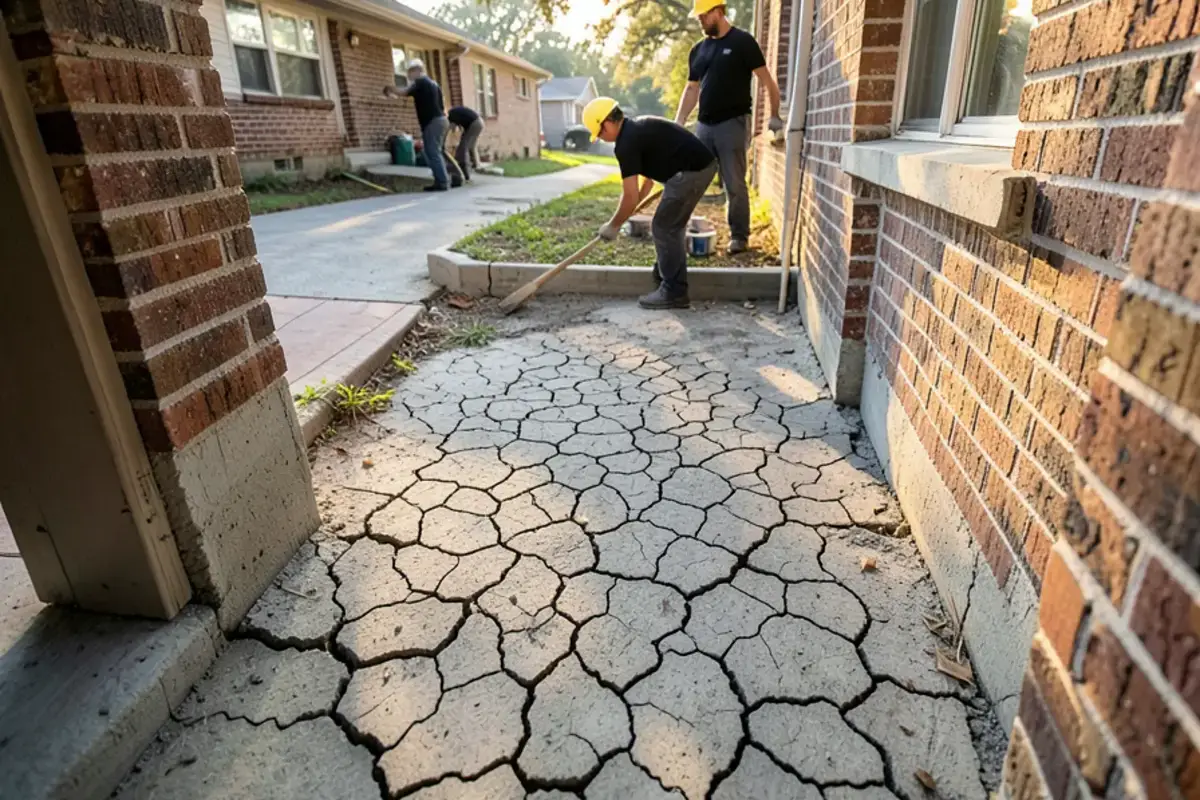
Houston slab leaks come from ground movement and pipe age, and the two often work together. Expansive clay grows in the wet months and contracts in dry ones. Rainfall here averages near 53 inches annually, according to NOAA climate normals, and long summer dry spells follow the wet months. The slab moves with that cycle, and the pipe under it moves too.
Older copper can also wear thin where it rubs against concrete or where hard water has pitted it. Fittings under the slab are another weak point. About a quarter of city water customers had a leak during the February 2021 freeze, according to a Houston Public Works estimate reported by the Houston Chronicle, and some of that damage sat hidden.
How is a slab leak located?
A slab leak is located in stages, so the floor is opened once, in the right place:
- Confirm the leak at the water meter with all fixtures off.
- Isolate hot and cold lines and pressure test each one.
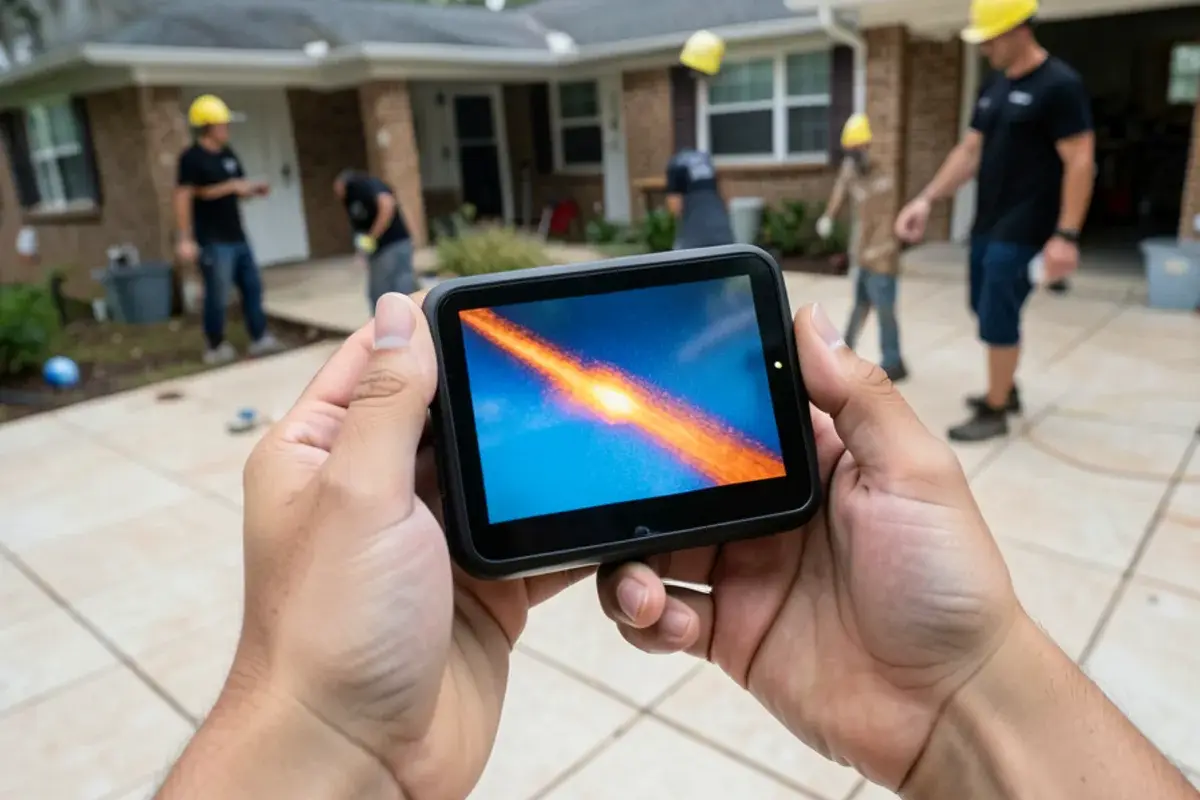
- Listen along the line with acoustic gear, and scan with a thermal camera on the hot side.
- Mark the spot and review the findings with you before any cutting.
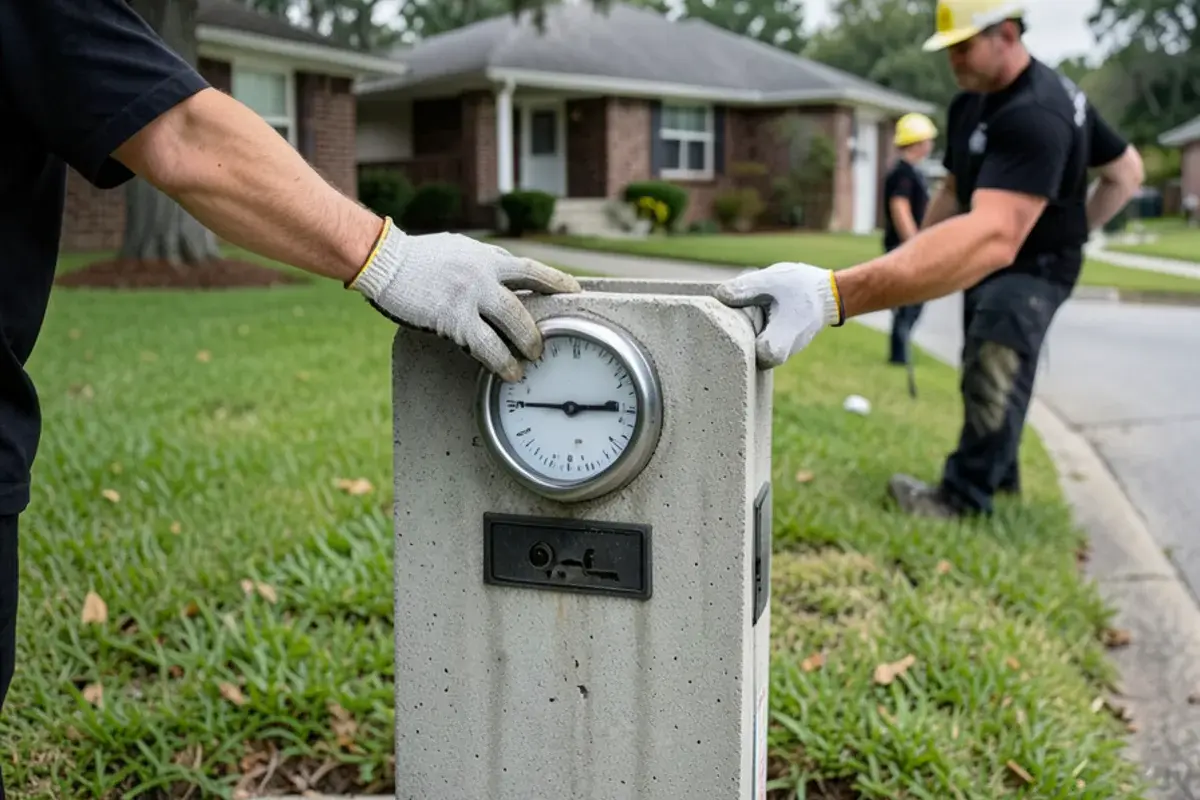
If the pressure test holds, the leak is somewhere else, and a leak detection visit follows the supply lines through walls and the yard instead.
Which repair method fits your home: spot repair or reroute?
The right repair depends on the pipe's condition, what sits on top of it, and whether the soil is likely to move again.
| Repair type | What happens | Fits when | Downside |
|---|---|---|---|
| Spot repair through the slab | Open the floor at the leak, replace the failed section, close the slab | One leak, sound pipe, easy floor access | Floor repair needed, other sections stay in service |
| Reroute | Abandon the leaking line, run new pipe through walls or attic | Repeat leaks, costly flooring, moving soil | Some wall patching, new route to plan |
| Whole-home repipe | Replace the supply system | Widespread corrosion, several past leaks | Largest job, longest-lasting fix |
If your house has had more than one leak, read about whole house repiping before you fix the same system again. Sewer lines under a slab are a separate problem, covered under sewer line replacement after soil shift.
How does a slab leak repair visit work?
A visit moves from proof to plan to repair, and you see the plan before work starts:
- Call and describe the symptoms, including what the meter is doing.
- We confirm the leak and isolate the line.
- We locate the break and explain your repair options in plain terms.
- You get a clear, upfront quote for the option you choose.
- We make the repair or reroute, then pressure test the line.
- We go over what was done and how to watch for trouble.
What this work includes:
- Meter test and line isolation
- Leak location
- A repair or reroute of the failed section
- A pressure test after the repair
- A plain explanation of what failed
A spot repair means opening the slab at the marked point, replacing the failed section, and restoring the concrete. A reroute skips the slab, disconnects the leaking run, and carries new pipe overhead to the same fixtures. Either way the new pipe is pressure tested before it is covered.
The scope also covers what follows. Once the line is back on, the meter gets read again to confirm the leak has stopped, and the rest of the line gets checked, since a run that has failed once under a slab may not be the only weak point. A reroute covers the attic run, the wall drops and the connections at each fixture. Capping the old run keeps it from holding pressure. Expect the floor opening to be backfilled and the concrete restored to rough level, ready for the flooring trade.
Floor finishes and foundation repair are separate trades. If the soil or slab needs attention, ask a structural engineer or foundation company.
What affects the cost of a slab leak repair?
The cost depends on access, method and how much pipe is involved. These are the main factors:
- Location: under open flooring, or below tile, hardwood or cabinets
- Method: a spot repair, or a reroute through the attic or walls
- Pipe: hot or cold line, and copper or another material
- Layout: single-story, two-story, or a long run across the house
- Restoration: flooring and drywall repair, which is usually separate work
We look at the job first and then give a clear quote, because two slab leaks in the same neighborhood can need very different work.
Depth counts as well. A break far from the edge of the slab means more concrete to open, or a longer run for a reroute. Tile is a common surprise, since matching old tile after a repair can be harder than the plumbing. A second leak on the same line can also tip the choice toward a reroute.
Which permit rules and insurance terms affect a slab leak?
Replacing a buried line is more than a leak stop. Section 104.2 of Houston's amended code exempts only repairs that replace or rearrange no pipe, valve or fixture, so ask the Permitting Center. Suburbs differ: West University Place's form sets the pipe allowed under a slab, and Stafford inspects underground plumbing before concrete and all plumbing before drywall.
Coverage is its own question. The Office of Public Insurance Counsel lists foundation or slab coverage as an optional add-on for water damage from a plumbing system, and the Texas Department of Insurance says most policies do not cover a continuous leak. Read your declarations page before any concrete is cut.
Plumbing in Texas is regulated by the Texas State Board of Plumbing Examiners. Every plumber working on your slab should give you a license number you can check. In Houston, the Houston Permitting Center sets the permit rules for plumbing work.
How can you lower the risk of another slab leak?
Clay will keep moving, so the goal is less stress on the pipe. Keep soil moisture steady around the foundation during dry months. Know where your main shut-off valve is and test it once a year. Check your meter whenever a bill looks wrong. If your water is hard, a water softener may reduce the scale and pitting that wear on pipe.
Why PipeElectric for slab leak repair?
Slab work rewards a careful look before anyone cuts, and that is what customers notice about us:
- Google customers rate PipeElectric 5.0 across 18 reviews.
- Reviews often mention plain explanations of what went wrong.
- Reviews also mention clean work and fair pricing.
- You get a clear, upfront quote before the repair starts.
- On-time arrival is another point customers raise.
Slab calls start at 7 AM and end at 6 PM Friday or 8 PM Sunday through Thursday. Phones stay closed Saturday, and the main valve can hold a leak until they reopen.
We take slab leak calls across Houston and nearby communities, including Bellaire, West University Place, Sugar Land and Katy.
What customers say about our plumbing work
5.0 on Google from 18 reviews, checked October 2026.
“They had someone out to my house within a couple of hours. The technician was professional, he explained everything clearly, located the gas leak, and repaired it on the spot. He even double check the rest of the line to make sure there wasn't any other leak. I really appreciated how honest and thorough they were.I highly recommend PipeElectric to anyone looking for fast, affortable and caring service!”
“PipeElectric did a great job! Had a issue with some outlets and a small leak under my sink. They showed up on time, real professional and got everything fixed quick. Prices was fair too. Definitely calling them again if I need anything else!”
“Had a slow kitchen sink. PipeElectric cleared the clog fast. The plumber was friendly and gave useful tips. Great service!”
Slab Leak Repair around Houston
- Bellaire · Flat clay lots hold postwar Bellaire slabs beside 1990s rebuilds, so pipe age varies door to door.
- West University Place · West U's form limits under-slab pipe to copper L, K or PEX-a, each line sleeved.
- Sugar Land · Most Sugar Land homes date from 1980-1999, so those slabs have sat decades on moving clay.
- Katy · Katy sinks about two centimeters a year by one University of Houston study, adding stress underfoot.
- Missouri City · Fort Bend clay sits under Missouri City's 1970s slabs, about a fifth of its housing.
- La Porte · Most La Porte housing is 1970s and 1980s tract stock on clay, so slab lines there are aging.
- Spring · Ground off Lindell Road has sunk over 30 cm since 2007, which strains Spring slabs.
- Alvin · Alvin's 1985 median home sits on alluvial loams and clays that keep slab lines under stress.
Slab Leak Repair questions
How do I know if I have a slab leak or a leak somewhere else?
Turn off every fixture and watch the water meter. If it keeps moving, you have a leak on the house side. A warm spot on the floor, the sound of running water with nothing on, or damp flooring near an interior wall all point toward the slab. A pressure test then separates the hot side from the cold side.
Should I repair the slab leak or reroute the pipe?
Repair through the slab when the pipe is otherwise sound and the break is in one reachable spot. Reroute when the line has leaked before, runs under finished flooring you want to keep, or sits in soil that keeps moving. A reroute abandons the old section, so the same stretch of pipe cannot fail twice.
Can I wait to fix a slab leak?
No, not for long. Water under a slab keeps moving through the soil, and in Houston clay that can change how the foundation is supported. If the leak is on the hot side, the water heater also runs nonstop. Shut the main valve between uses if you can, and get the leak located soon.
Does homeowners insurance pay for slab leak repair?
It depends on your policy, and some cover the cost of reaching the pipe and the water damage while excluding the pipe repair itself. Call your insurer before the slab is opened, photograph the damage, and keep every receipt. Your adjuster may want to see the leak location before anyone repairs it.
How is a slab leak found without tearing up the floor?
A plumber isolates the hot and cold lines, pressure tests each one, then uses acoustic listening gear and sometimes a thermal camera to narrow down the spot. The goal is a single small opening. Clay soil and tile can dull the sound, so more than one method is common on Houston slabs.
Water meter moving with everything off? Call and describe what you see.
- ★ 5.0 on Google, 18 reviews
- Sun–Thu 7 AM–8 PM · Fri 7 AM–6 PM · Sat closed
- Clear, upfront quote
PipeElectric - Plumbing & Electrical - HVAC · Houston, TX · (321) 559-0657