
By the PipeElectric team · Published October 30, 2026 · Updated October 30, 2026
Does insurance cover sewer backup damage? On a standard homeowners policy, usually not, unless you added a water backup endorsement. The Insurance Information Institute says typical homeowners and flood policies both leave it out. Your own policy wording decides the answer, so read it. This is general information and not legal or financial advice.
Does insurance cover sewer backup on a standard HO-3 policy?
Usually not. The HO-3 is the common form for owner-occupied homes, and the sample published by Triple-I lists water or water-borne material that backs up through sewers or drains under its Water Damage exclusion. The same wording also takes in overflow from a sump pump and related equipment.
That is the sample form. Your insurer's version may read differently, and Triple-I itself notes that some policies include sewer and drain backups while many do not. Look for the Exclusions section and any endorsements listed on your declarations page.
Backup happening now? Stop the water, then call.
- ★ 5.0 on Google, 18 reviews
- Sun–Thu 7 AM–8 PM · Fri 7 AM–6 PM · Sat closed
- Clear, upfront quote
Which water losses are treated differently?
The source of the water usually decides how a policy responds. This table shows the general pattern in standard forms, and your own policy controls:
| What happened | Typical base policy result | Where coverage may come from |
|---|---|---|
| Pipe bursts inside the home | Often covered | Base policy |
| Sewage backs up through a drain | Usually excluded | Water backup endorsement |
| Rising floodwater enters the home | Excluded | Separate flood policy |
| The failed pipe or appliance itself | Often not covered | Possibly a service line endorsement |
| Damage to the line from wear or roots | Usually not covered | Ask about a service line endorsement |
Triple-I says standard homeowners policies cover burst pipes, and that flood damage is excluded and sold separately through the National Flood Insurance Program and some private insurers. The sample HO-3 also leaves out loss to the system or appliance from which the water escaped. In plain terms, the wet floor and the broken pipe can land in different places.

What does a water backup endorsement add?
A water backup endorsement adds back coverage that the base policy removes. Triple-I describes it as a separate product or an endorsement, and some carriers call it a sewer backup rider. NerdWallet describes it as coverage that can pay for damage if a sewer or drain backs up or a sump pump overflows. Terms vary, so these are the details to pin down:
- Limit: the most the endorsement will pay for one event
- Deductible: whether it matches your main deductible
- Scope: whether cleanup, flooring and contents are included
- Sump overflow: whether it is part of the same coverage
- Cause limits: how it treats backups during a flood
- Waiting period: whether coverage starts right away
Price depends on the insurer, so get a current figure from your agent. Older figures found online may be years out of date.
How much water backup coverage does a slab home need?
Size the limit to your ground floor. A slab house has no basement to catch a backup, so sewage lands on finished flooring and spreads from the lowest drains. Walk those rooms and add up what would have to go:
- Flooring in every room the water could reach
- Drywall and insulation cut out above the wet line
- Baseboards, vanities and lower cabinets
- Furniture, rugs and anything stored on the floor
- Professional cleanup and drying
Compare that total with the endorsement's limit. Ask your agent what limit you have now and what the next level up would cost. The cheapest endorsement may cover only a fraction of a whole ground-floor loss.
What if the backup happens during a flood?
The cause decides it, and each policy reads that cause differently. FEMA's training material on the Standard Flood Insurance Policy says the policy does not pay for water that backs up through sewers or drains, unless there is a flood in the area and the flood is the proximate cause of the backup. A backup on a dry day is no flood claim. One during a general flood may be.
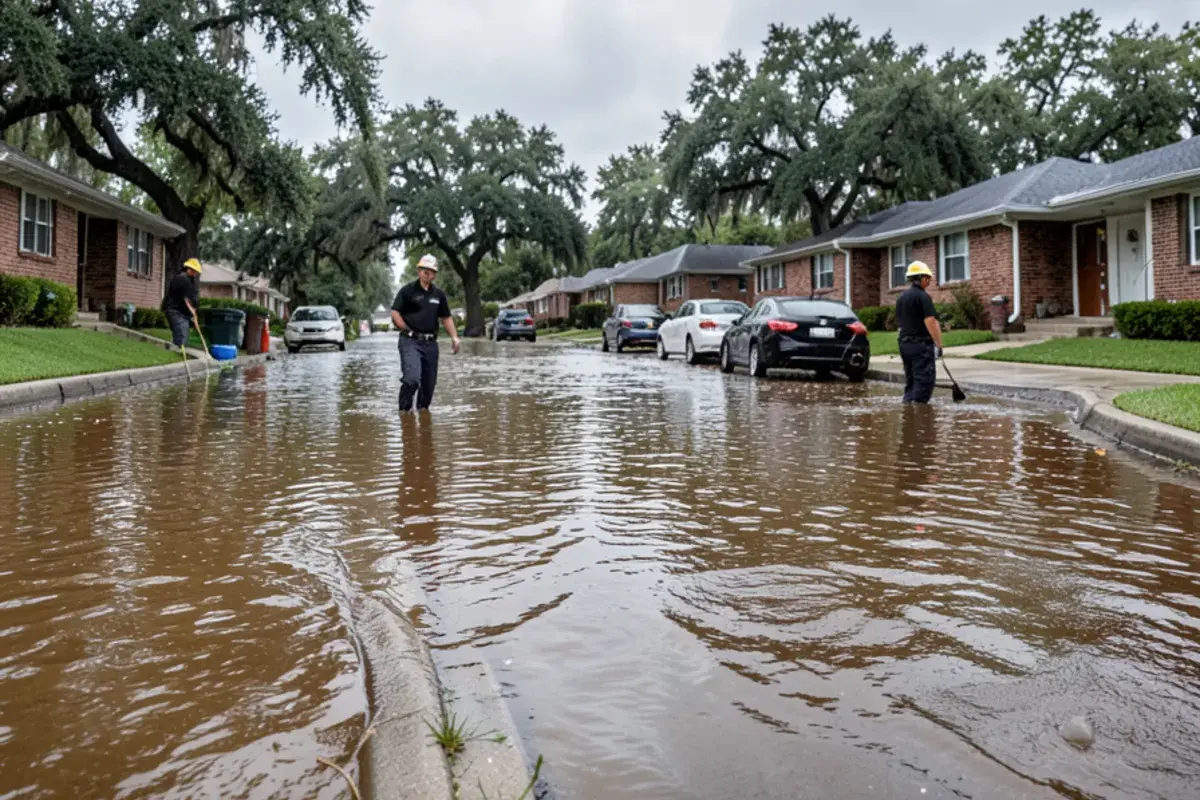
Harris County sees both kinds, so ask how your endorsement treats a backup caused by flooding, since some exclude it. If the water comes up during a storm, note the time and photograph the street. That record shows what was happening outside when the drains overflowed. National Flood Insurance Program coverage generally starts 30 days after you apply, so settle this in a calm month.
What should you do after a sewer backup if you plan to claim?
Stop the damage, document it, and call the insurer early. This order keeps your options open:
- Stop all water use and keep people clear.
- Photograph and video everything before cleanup.
- Call your insurer or agent, and write down the claim number.
- Ask before you throw out damaged items, or keep samples.
- Have the blockage cleared, and keep the invoice.
- Save receipts for cleanup and any temporary costs.
Our guide to sewage backing up in the house covers the safety steps. The EPA advises calling a professional with contaminated-water experience when the water comes from sewage, and drying other water-damaged areas within 24 to 48 hours, so avoid long delays.
If the public sewer caused it
Report it to the city or utility first, and ask for a reference number. In Houston that means 311. Keep the number with your photos, because your insurer may ask whether the public line failed.
A claim against a city or utility is a separate process with its own deadlines. Ask its claims office how to file, and talk to an attorney if the loss is large.
What our team suggests asking your agent this week
Ask while your drains are working. Our team cannot read your policy for you, but these questions are worth putting to the person who sold it:
- Do I have water backup coverage now, and at what limit?
- Would a backup from the public sewer be treated the same as one from my own line?
- Is my sewer lateral covered by any service line endorsement?
- What do you need from a plumber to support a claim?
If you have a complaint about a claim, or a question your insurer will not answer, the Texas Department of Insurance regulates home insurers in the state and takes consumer questions.
How can you lower the chance of a claim?
Prevention helps under any policy, so start with the line itself.
- Have a sewer camera inspection if the house is older or the drains are slow.
- Keep grease and wipes out of the drains.
- Fix known roots or cracks with a sewer line repair.
- Ask about a backwater valve. Triple-I describes it as a device that lets sewage go out but not come back in.
The bottom line on sewer backup coverage
Assume a standard policy will not pay unless you have checked. Read the Water Damage exclusion, look for an endorsement, and ask your agent the questions above.
For homes in Jacinto City and across Houston, the plumbing side is simple: clear the line, find the cause, and keep the record. Our emergency sewer backup page covers that part, and your policy covers the rest, if it does.
Common questions
Can renters get sewer backup coverage?
Often, yes. Triple-I says a sewer backup rider can be added to homeowners or renters coverage. A renter's policy protects your belongings and not the building, so the rider usually matters for furniture, electronics and clothing. Ask your agent about the limit, and ask your landlord how the building's own policy treats a backup.
Does flood insurance cover a sewer backup?
Triple-I says flood insurance does not cover ordinary sewer backups, and it treats them as a separate risk. If rising floodwater is involved, the facts of the event can matter. Ask your flood insurer how it would handle backup during a flood, because that answer depends on the policy and on what caused the water to enter.
Should a plumber write down what caused the backup?
It helps. A written note of what failed, where, and what the camera showed gives your adjuster something concrete. Ask for the note and any photos or footage when the work is done. Keep it with your receipts, your own photos and a log of each call with your insurer.
Does a water backup endorsement pay to fix the sewer line itself?
Usually not. The endorsement is written for water damage inside the house, and the sample HO-3 also leaves out the system the water escaped from. Clearing the blockage and repairing a cracked lateral often stay your cost. Ask your agent whether a service line endorsement is sold for your address, and keep the plumber's camera footage with the claim.
Sewer backup and a claim to file? Call and get the cause on record.
- ★ 5.0 on Google, 18 reviews
- Sun–Thu 7 AM–8 PM · Fri 7 AM–6 PM · Sat closed
- Clear, upfront quote
Written by the PipeElectric team
PipeElectric is a Houston plumbing company with 18 Google reviews and a 5.0 rating. Read about us.
Sources
- NerdWallet: What Is Water Backup Coverage, and Do You Need It?
- Triple-I: Which disasters are covered by homeowners insurance?
- Triple-I: How to protect your home from water damage
- Triple-I: Sample HO-3 policy form (HO 00 03 10 00)
- EPA: A Brief Guide to Mold, Moisture and Your Home
- FEMA Emergency Management Institute: IS-1104 NFIP Dwelling Form lesson