
By the PipeElectric team · Published October 30, 2026 · Updated October 30, 2026
Choosing a water heater in coastal Texas comes down to one measurement: your distance from breaking waves. FEMA says salt spray is heaviest at the shoreline and drops off rapidly in the first 300 to 3,000 feet. On Galveston Island, placement and materials decide how the unit ages. Farther inland, salt stops being the main concern.
How far inland does salt air reach?
Salt air fades fast with distance, and FEMA gives usable numbers. Its 2019 technical bulletin says salt spray is greatest near breaking waves and declines rapidly in the first 300 to 3,000 feet from shore. Accelerated corrosion has still been seen 5 to 10 miles inland, and beyond that, rates look like those in milder conditions.
Use these bands as a rough guide:
| Distance from breaking waves | Risk to a water heater | Example setting |
|---|---|---|
| Under 300 feet | Severe | Gulf-front homes on Galveston Island |
| 300 to 3,000 feet | High | Blocks behind the seawall or dune line |
| 3,000 feet to 5 miles | Moderate | Bay side of the island, open shoreline towns |
| 5 to 10 miles | Mild | Areas with steady onshore wind |
| Beyond 10 miles | Close to inland | Most of the Houston metro |
Orientation matters too. FEMA's older fact sheet notes that corrosion is most pronounced within 3,000 feet of the ocean, and it adds that exposure and upkeep shape the result. A unit in an open-air garage facing the Gulf ages faster than one behind a closed door next door.
Salt crust on your water heater? Call before the next leak finds the floor.
- ★ 5.0 on Google, 18 reviews
- Sun–Thu 7 AM–8 PM · Fri 7 AM–6 PM · Sat closed
- Clear, upfront quote
Which water heater parts does salt attack first?
Salt attacks the thin and exposed metal first, well before the tank itself. Check these parts:
- Screws and seams on the outer jacket
- Burner assembly and gas control connections on a gas unit
- Draft hood and metal flue on tank models
- Electrical terminals and element covers on electric units
- Union fittings and shut-off valves on top
- The drain valve and any metal drain pan
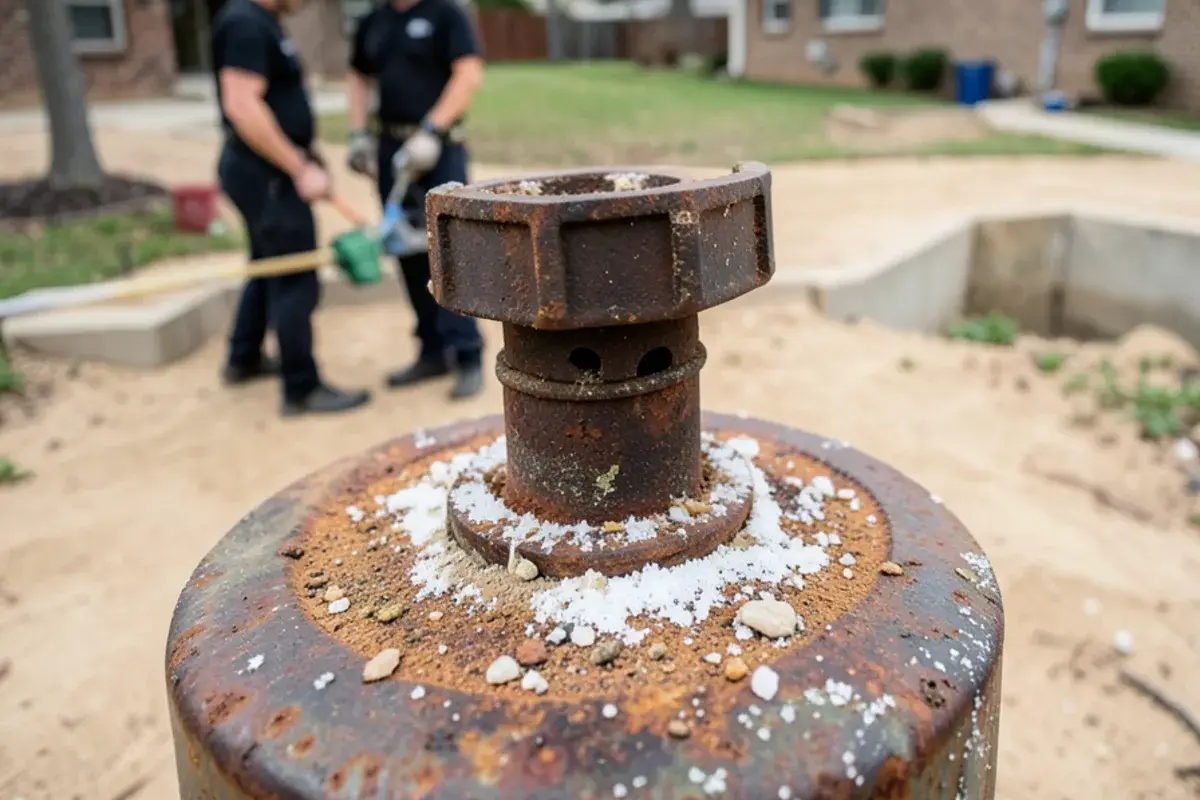
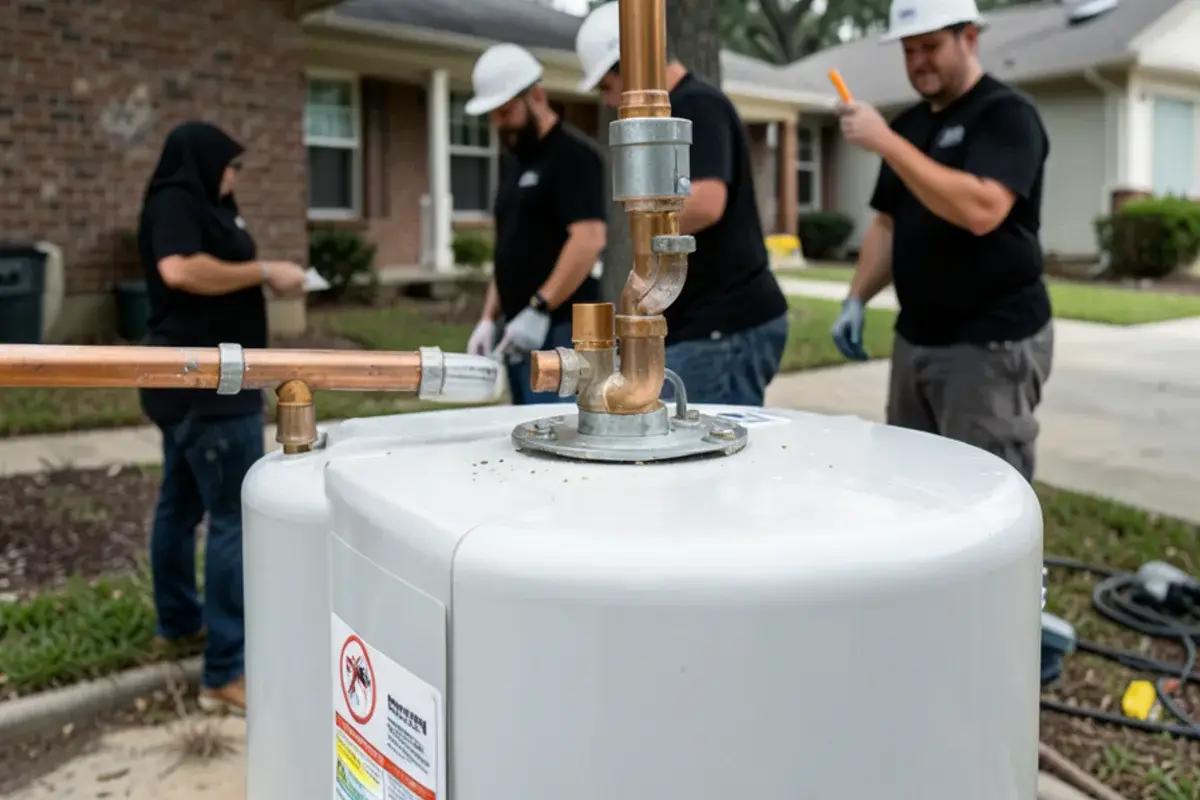
Two FEMA cautions apply directly. Copper and steel should not be joined where the galvanic difference is high, which is why dielectric connections matter at the tank. FEMA also warns that the phrase "corrosion-resistant" means little alone, because suitability depends on the material, the coating, the location and the upkeep.
Straps, pans and hangers count too. FEMA's coastal materials sheet says most jurisdictions require metal building hardware to be hot-dipped galvanized or stainless steel, and some local codes call for thicker coatings than off-the-shelf products carry. Ask what each support is made of before it goes in.
Does Galveston's tap water corrode a water heater?
Not the way the air does, because the salt problem sits outside the tank. The City of Galveston's water quality report for 2023 says it buys treated surface water from the Gulf Coast Water Authority's Thomas A. Mackey plant in Texas City, and that the raw water travels by canal from the Brazos River. The report lists chloride at 51 ppm, against a limit of 300.
Hardness is the inside concern. The same report lists total hardness at 127 ppm, which works out to about 7.4 grains per gallon. That is enough to leave scale on electric elements and sediment on a tank bottom, so an island home needs the same flushing and anode checks as a mainland one.
Where should a coastal water heater go?
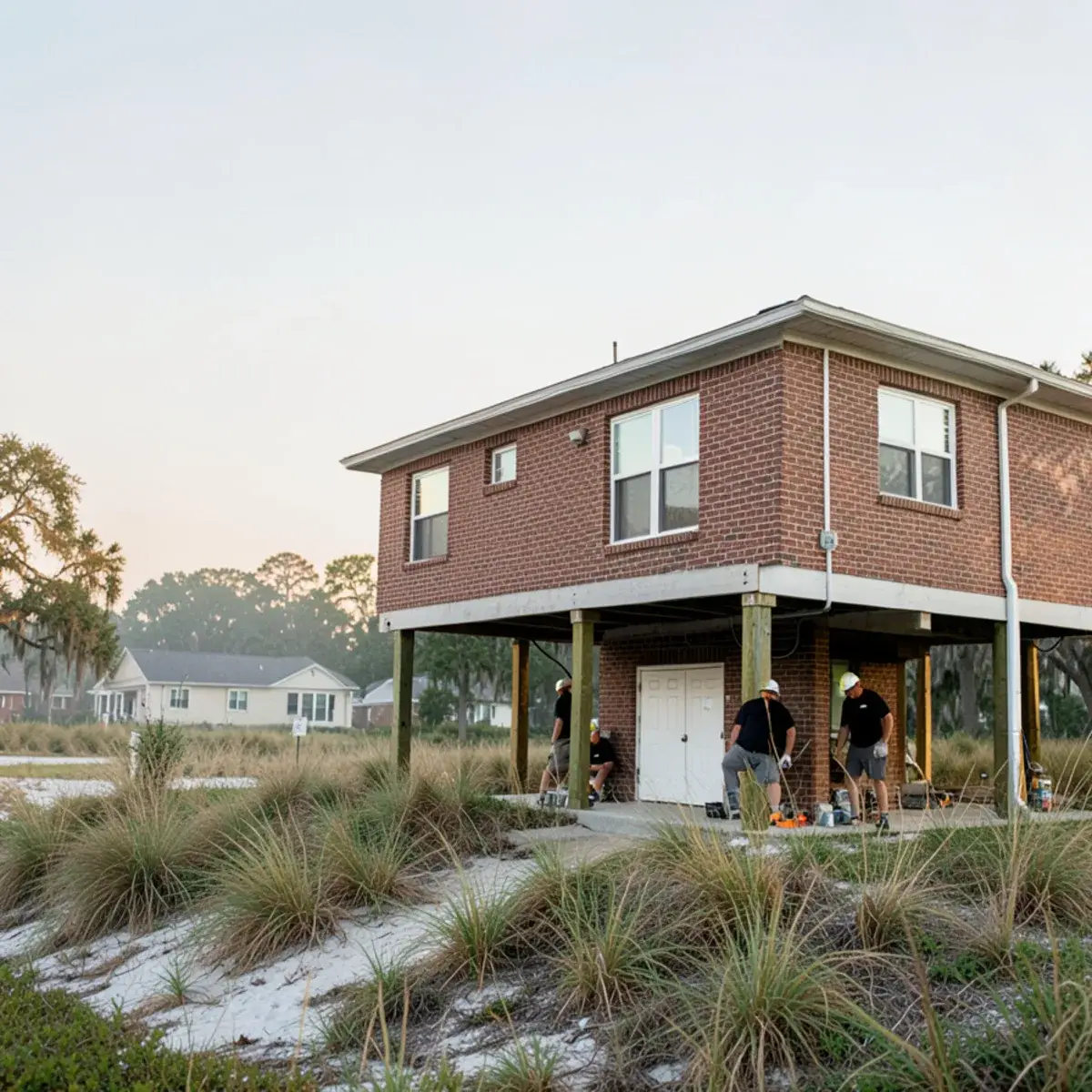
Put it high, enclosed and easy to reach. FEMA's guide calls elevating utilities and mechanical equipment the preferred protection. Hurricane Ike shows why. It came ashore at Galveston on September 13, 2008, after surge began overtopping the 17-foot seawall the day before.
For a raised home, the usual choices are:
- An interior closet on the living level, which is the best protection from salt and flood
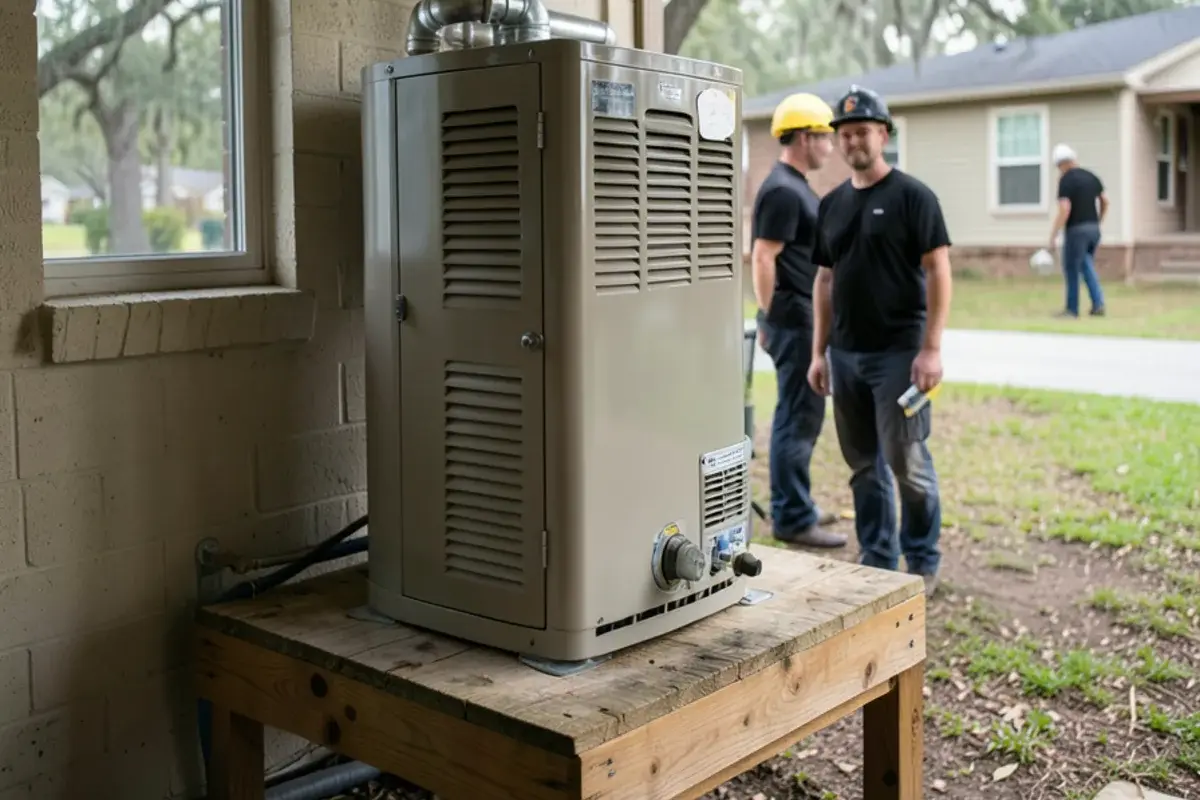
- A raised platform in an enclosed utility room
- A ground-level enclosure, which is the weakest choice in a flood zone
How should pipes reach a raised heater?
A heater on the living level still needs lines running up through the floor, and a surge goes after those first. FEMA's utility fact sheet gives three rules that apply on any raised coastal home:
- Never attach plumbing runs to breakaway walls.
- Attach risers on the landward side of interior piles or other vertical supports.
- Run plumbing inside the floor joists where you can.
A line fastened to a breakaway panel leaves with the panel. A snapped supply under a raised house can then run until someone closes the valve.
Local floodplain rules may set the required height, so confirm with the city before you move equipment. A move also changes the gas, vent, drain and electrical work, and all of it should be on the written estimate.
What water heater fits coastal Texas homes best?
The right water heater for coastal Texas depends on where it can live. Compare the common types:
| Type | Coastal strength | Coastal concern |
|---|---|---|
| Gas tank | Familiar swap, no fan needed on many models | Burner and flue exposed to salt air |
| Electric tank | No flue, simple install | Terminals need dry air |
| Tankless | Small, wall-hung, can sit high | Case and vent exposed if installed outside |
| Heat pump | Efficient, and can dehumidify the room | Coil draws in the room's air, so salty air is a poor match |
ENERGY STAR says a heat pump model needs about 1,000 cubic feet of air around it and a space that stays between about 40 and 90 degrees. Installed in an interior room, it can help dehumidify. Installed in a salty, open-air space, its outdoor-air exposure becomes the risk. For gas alternatives, compare tankless water heaters against a standard tank.
What does our team check on a unit near the coast?
Our team's advice is to treat a coastal heater as equipment that needs a yearly look, even when it runs fine. Here is the routine we suggest for any homeowner:
- Inspect the jacket, flue and top fittings for rust bloom.
- Rinse salt off anything outdoors with fresh water, with the power off and panels closed.
- Test the shut-off valve so it still turns.
- Check for a dielectric connection where copper meets steel.
- Look in the drain pan for rust stains or moisture.
Small rust spots on a screw are cosmetic. Rust at the bottom seam, or weeping at the base, means the tank itself is going. In that case, plan a replacement before a storm or a holiday forces it. Our page on water heater repair covers what can be fixed.
Does West University Place need to worry about salt air?
No. West University Place sits about 8 miles from downtown Houston, far inland from the 5-to-10-mile band in FEMA's bulletin. A water heater there faces the usual Houston concerns: humidity, attic or garage heat, sediment and age. Rust on an inland unit points to a leak or condensation, so look for that source first.
The same goes for most of the metro. Do not pay extra for coastal upgrades you do not need.
What should Galveston County owners do next?
Measure your distance from open water, look at the jacket and flue, then decide whether the location still makes sense. If you are replacing the unit, plan the placement before you pick the model. Our water heater installation page explains the options. Galveston is about 50 miles from downtown Houston via I-45, so call first to confirm availability.
Common questions
Does salt air shorten water heater life in League City or Friendswood?
Much less than on the beach. FEMA says accelerated corrosion has been found as far as 5 to 10 miles inland, then falls toward ordinary inland rates. A mainland home set back from open water is at the low end of that risk. A unit in an open garage near Galveston Bay deserves more attention than one in an inside closet.
Should a coastal water heater go outside?
Usually not if an indoor spot is available. Inside a conditioned or enclosed space, the unit stays out of direct salt spray. An outdoor tankless model can work, but its case, vent and fittings face the air every day. Where a heater must sit outside, look at the rated enclosure and plan on frequent rinsing and inspection.
Does Galveston tap water damage water heaters?
No more than mainland water does. The island buys treated Brazos River surface water from a plant in Texas City, and the city's report lists chloride at 51 ppm for 2023. Hardness of 127 ppm is the bigger factor inside the tank, since it leaves scale and sediment. Salt damage on the island comes mainly from the air.
Is a stainless steel water heater better near the coast?
Sometimes, but the label alone does not settle it. FEMA warns against accepting a product just because it is called corrosion-resistant, and says to weigh the coating, the location and the upkeep. On Galveston Island, a stainless tank in an open garage can still lose its burner, flue and fittings to salt. Placement usually comes first.
Rust on the heater near the coast? Call and describe where it sits.
- ★ 5.0 on Google, 18 reviews
- Sun–Thu 7 AM–8 PM · Fri 7 AM–6 PM · Sat closed
- Clear, upfront quote
Written by the PipeElectric team
PipeElectric is a Houston plumbing company with 18 Google reviews and a 5.0 rating. Read about us.
Sources
- FEMA NFIP Technical Bulletin 8, June 2019 (hosted by City of Corpus Christi)
- FEMA 499 Home Builder's Guide, Fact Sheet 8: Coastal Building Materials (hosted by Louisiana DENR)
- FEMA 499 Home Builder's Guide, Fact Sheet 29: Protecting Utilities (hosted by Louisiana DENR)
- ENERGY STAR: Heat Pump Water Heaters
- Wikipedia: Hurricane Ike
- City of Galveston: Water Quality Report 2024 (year ending December 31, 2023)