
By the PipeElectric team · Published October 30, 2026 · Updated October 30, 2026
A cold snap can freeze pipes in Houston homes, so insulate anything in the attic, garage or outside walls, disconnect hoses, learn where the main shut-off valve is, and check what your own water utility says about dripping faucets. That last step matters, because Houston and neighboring cities have given opposite advice. Start two days before the cold arrives.
Why do Houston pipes freeze at all?
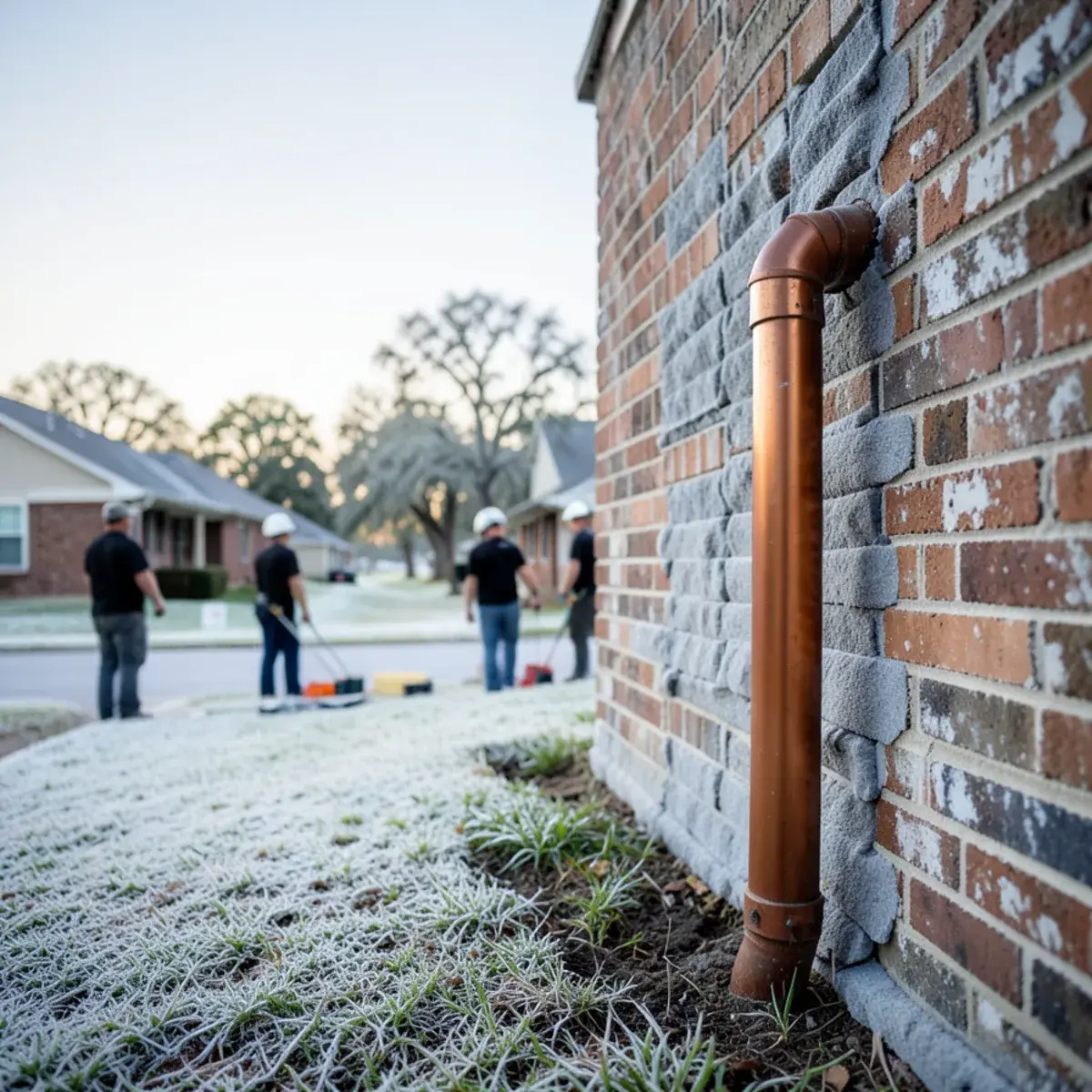
Houston pipes freeze because local homes are built for heat, and water lines often run through attics, garages and outside walls. Those spaces follow the outdoor temperature. In a normal winter that barely matters. A rare long freeze finds every exposed run at once.
February 2021 shows how far it can go. Intercontinental hit 12 degrees and Hobby hit 15, by National Weather Service records, and the agency's climate summary shows 13 degrees for Houston on February 16. ABC13 counted 44 straight hours below freezing. That was still well short of the 91-hour record set in 1983, according to FOX Weather. Duration does the damage, because a pipe that survives one cold night may not survive the second.
Hard freeze in the forecast and exposed pipe in the attic? Call while phones are open.
- ★ 5.0 on Google, 18 reviews
- Sun–Thu 7 AM–8 PM · Fri 7 AM–6 PM · Sat closed
- Clear, upfront quote
What should you do two days out?
Two days out, finish every job that needs a store trip or an attic climb. Work from the outside in:
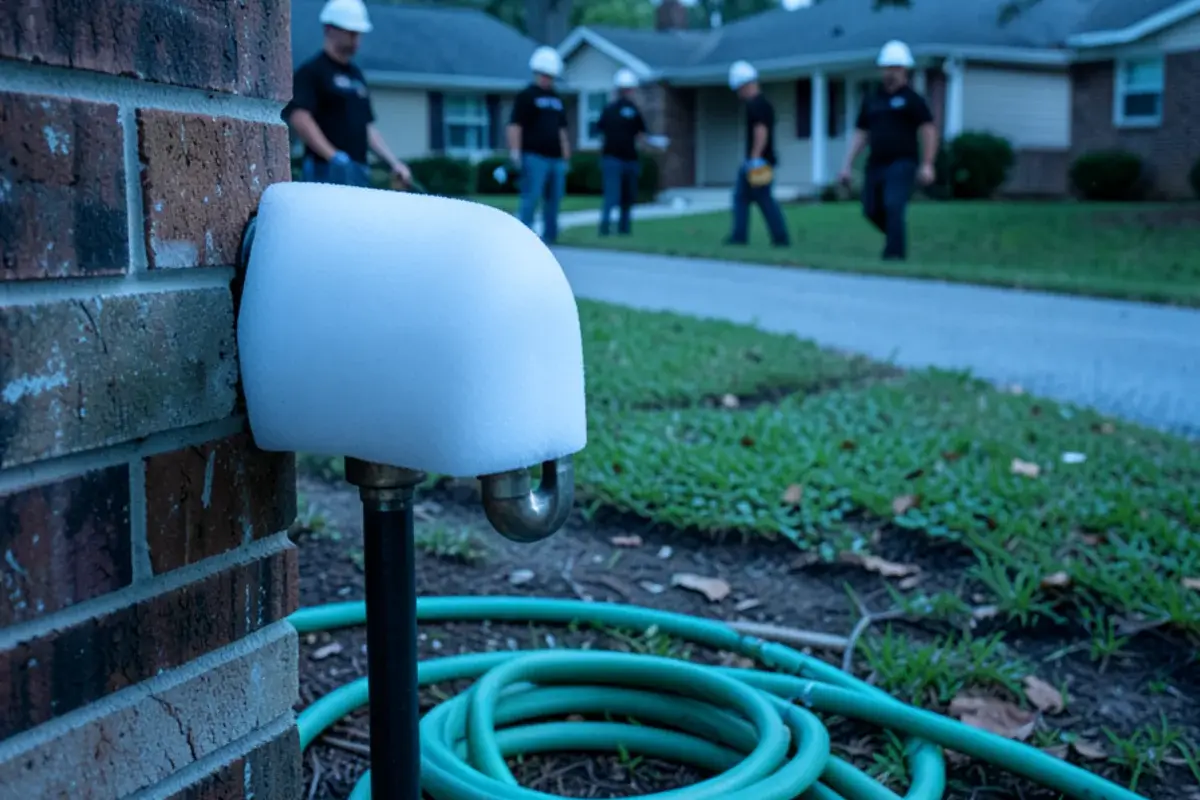
- Disconnect garden hoses and fit covers on outdoor faucets
- Wrap exposed outdoor pipe, using rags or towels if foam is sold out
- Turn off automatic sprinklers, as FOX 26's freeze guide advises
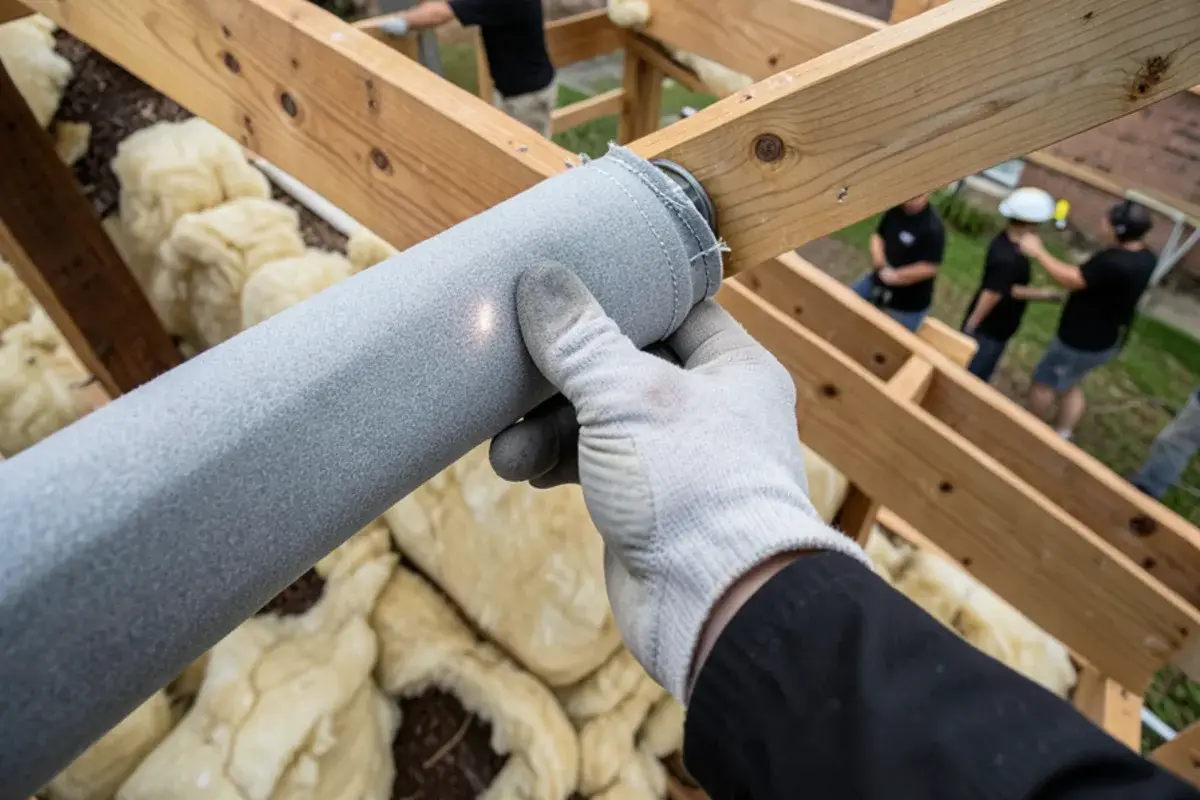
- Insulate attic and garage lines you can reach
- Close garage doors and foundation or crawl vents if your home has them
- Find the main shut-off valve and confirm that everyone in the house can reach it
- Keep a pipe wrench or valve key where you can find it in the dark
- Open cabinet doors under sinks on outside walls so room heat reaches the pipes
Going away? Keep the heat on low and drain the system, or ask someone to check the house daily.
Should you drip faucets in Houston?
Follow your own water utility, because the advice differs from city to city. This is the point most freeze lists get wrong.
During the January 2026 freeze, the Houston Chronicle reported that Houston Public Works Director Randy Macchi told City Council not to leave faucets running. His reasoning: the more people drip, the harder it is for the system to keep up if a treatment plant has trouble. He suggested that worried residents shut off and drain their lines before the storm instead.
The same report noted that Katy took the opposite position and encouraged residents to let cold water drip from pipes prone to freezing. FOX 26's guide that week also recommended a slow drip.
Here is how to sort it out:
| Your water comes from | What to do |
|---|---|
| City of Houston | Follow the latest Houston Public Works notice |
| A separate city such as Bellaire or West University Place | Check that city's own alert |
| A municipal utility district | Check the district's notice |
| A private well | Protect the well equipment, then decide with your plumber |
A fresh notice from your utility beats any list, including this one.
At what temperature do Houston pipes freeze?
Plan around 20 degrees. Field tests from the Building Research Council at the University of Illinois found that uninsulated pipe in an unconditioned attic began to freeze when the outside air fell to about 20 degrees, and plumbers surveyed in southern states placed burst-pipe trouble in the teens. Water freezes at 32, but the house holds enough heat to protect a pipe for a while.
That figure is a guide and no promise. Wind through a gap in an outside wall can freeze a pipe at a warmer reading. This rough table shows how we would read a forecast:
| Forecast low | What it means for exposed pipe |
|---|---|
| 28-32 degrees for a few hours | Hoses and bare hose bibs are at risk |
| 21-27 degrees | Bare lines in garages and outside walls need cover, especially in wind |
| 20 degrees or below | Attic lines are at risk, so finish the two-day list |
| Below freezing for 24 hours or more | Duration is the danger, so plan for the thaw as well |
What else breaks in a freeze besides house pipes?
Equipment outside the walls often goes first. Walk the lot and note anything holding water above ground:
- Sprinkler backflow device: the brass assembly sits bare in the wind and splits easily.
- Tankless heater on an outside wall: built-in freeze protection needs power, so check the manual for drain steps.
- Pool equipment: moving water protects it only while the pump has power.
- Garage refrigerator line: thin tubing on a cold wall freezes early.
- Outdoor kitchen or shower: close its valve and open the faucet to drain it.
What did February 2021 teach Houston homeowners?
It taught people to plan for a freeze that takes the power and the water with it. FOX Weather reported that about 4 million Texans lost electricity for an average of 42 hours, and that 49 percent lost running water for an average of 52 hours. The National Weather Service listed broken pipes among the region's main impacts.
Three planning points follow from that:
- Store drinking water before the storm, even if you trust your tap
- Plan for pipes that freeze after the heat goes out, which the attic work above helps delay
- Stay safe while you wait, since Ready.gov warns against heating a home with a stove or oven, and against running a generator indoors or near windows
How does each pipe material fail?
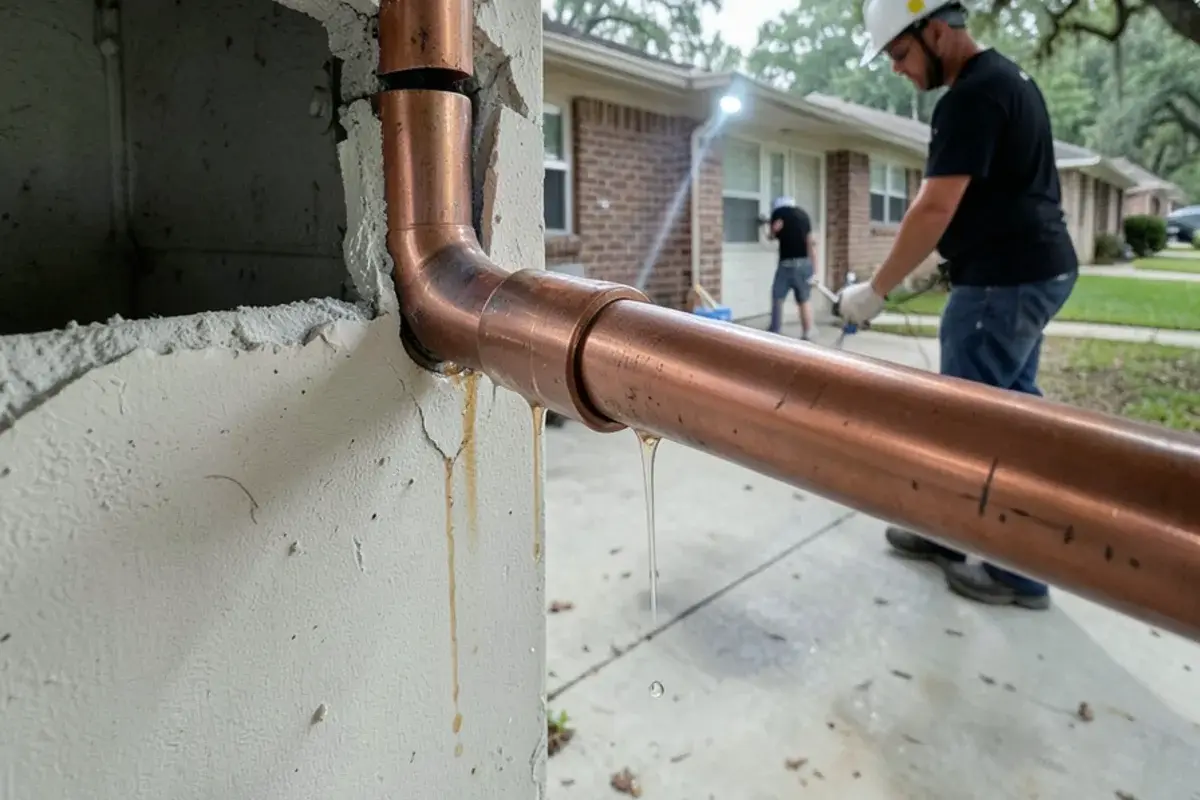
Knowing your pipe tells you where to listen on the thaw morning. Copper tends to split along its length, so the damage can stay quiet until the ice melts. PEX stretches and often survives, though its fittings can crack. CPVC turns brittle in the cold and can shatter, so treat an older CPVC attic run as the highest risk in the house.
What should you do on the morning of the thaw?
Stay near the main valve when temperatures climb. A split pipe often stays quiet until the ice melts:
- Walk the house and listen for spraying or dripping.
- Check the ceiling below the attic, plus the garage and exterior walls.
- If water is running, close the main shut-off valve right away.
- Turn off the water heater if the supply will stay off for long.
- Open faucets to drain what is left in the lines.
- Shut off power to any wet area if you can reach the panel safely.
- Photograph the damage before cleanup, then call about burst pipe repair.
Check the water meter once everything looks dry. If it still moves with the fixtures off, a hidden break remains, and leak detection will trace it.
What attic check does our team recommend?
Our team recommends a ten-minute look at the attic while the weather is mild. Trace each water line from the point where it rises out of the wall. Note any stretch lying on top of the insulation with bare air above it, since that section meets the full cold of the attic.
Good insulation sits between the pipe and the cold, with the warm house below. Moving the batts so the line is covered from above costs almost nothing. A homeowner in an older part of Bellaire or West University Place may also find runs that remodels left exposed.
How do you get ahead of the next freeze?
Do the attic and hose work now, while it is a chore and not a scramble. Save your water utility's alert page on your phone, and learn the main valve before you need it. If you have a run you cannot reach or a past freeze break, ask about it for your next plumbing repair visit.
Common questions
Should I shut off my water before a freeze?
It is a sound option if you are leaving home or worried about a known weak spot. Houston Public Works' director suggested that residents worried about their pipes shut off the water and drain the lines before a storm. Close the main valve, open a low faucet and a high one, and remember the water heater needs care if the supply stays off.
How do I know a pipe has frozen?
A faucet that gives a trickle or nothing while others work is the usual sign, often with frost on an exposed section. Open that faucet so melting water has somewhere to go, and warm the pipe gently with a hair dryer or warm towels. Never use an open flame. If you cannot reach the frozen section, call a plumber.
At what temperature should I worry about pipes freezing in Houston?
Start paying attention near 28 degrees, and act on any forecast close to 20. Field tests on uninsulated attic pipe found freezing began at about 20 degrees outside. Time matters as much as the reading, so a long night in the low 20s can do more harm than a short dip into the teens. Wind on an outside wall raises the risk further.
Will PEX pipe burst in a freeze?
It is less likely to than copper or CPVC, but it can still fail. PEX stretches as ice forms and usually returns to shape, while its fittings do not stretch at all. In a Houston attic, those crimp and expansion joints are the weak points. Insulate PEX the same way as any other pipe, and check the joints on the thaw morning.
Pipe split in the freeze? Shut off the main valve, then call during hours.
- ★ 5.0 on Google, 18 reviews
- Sun–Thu 7 AM–8 PM · Fri 7 AM–6 PM · Sat closed
- Clear, upfront quote
Written by the PipeElectric team
PipeElectric is a Houston plumbing company with 18 Google reviews and a 5.0 rating. Read about us.
Sources
- National Weather Service Houston/Galveston: Valentine's 2021 winter storm review
- National Weather Service: February 2021 Regional Climate Summary
- Houston Chronicle via Yahoo News: Should you drip your faucet during freezing weather? January 21, 2026
- FOX 26 Houston: What to do ahead of weekend freeze, January 22, 2026
- FOX Weather: Facts from the Great Texas Freeze
- ABC13: 44 hours of freezing, by the numbers
- Ready.gov: Winter Weather