
By the PipeElectric team · Published October 30, 2026 · Updated October 30, 2026
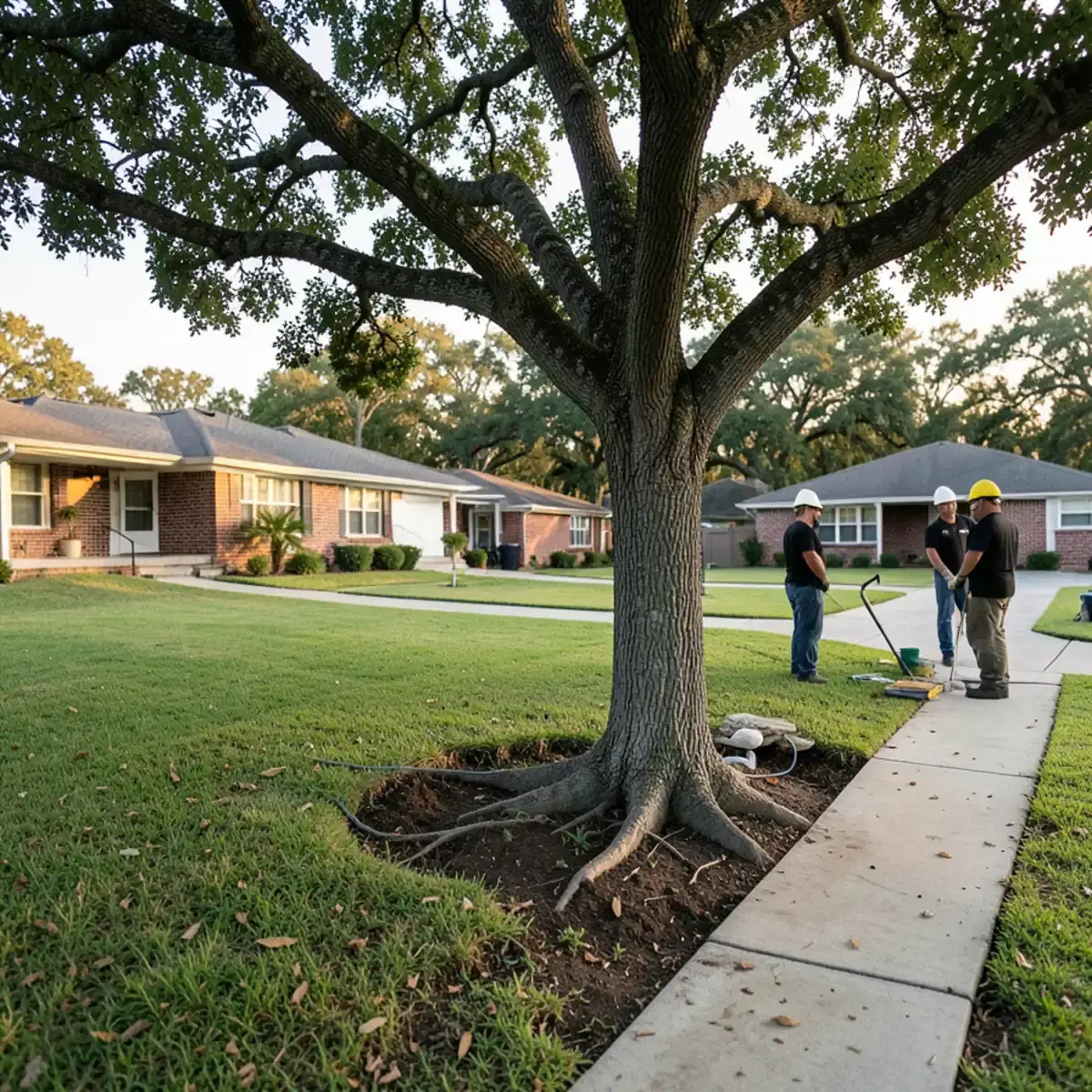
Tree roots in sewer line joints usually show up first as slow drains, gurgling and repeat clogs across several fixtures. Roots enter at small gaps, then grow into a mesh that catches paper and grease. Cutting clears the line for a while, but a lasting fix means sealing or replacing the leaking section.
How can you tell if roots are in the sewer line?
Look for trouble that affects more than one fixture and keeps coming back. A single slow sink is usually a local clog. Roots act on the main line, so the signs show up across the house:
- Toilets that gurgle or flush weakly
- Tubs and showers that drain slowly at the same time
- Clogs that return weeks or months after clearing
- Drains that back up during a wash cycle
- Sewer odor near a cleanout or in the yard
- Unusually green patches of grass along the line
- Sinkholes or soft spots over the pipe
None of these alone proves roots are the cause. A camera does. If a tub is filling with dirty water, stop using the drains and see our guide to sewage backing up.
Gurgling toilets and a big tree? Call before it backs up.
- ★ 5.0 on Google, 18 reviews
- Sun–Thu 7 AM–8 PM · Fri 7 AM–6 PM · Sat closed
- Clear, upfront quote
How do tree roots get into a sewer line?
Roots thrive where water is, and a leaking joint gives them a steady supply. They do not need to break a sound pipe. A hairline gap is enough for a fine root to enter, and warm, wet conditions inside the pipe do the rest.
Sewer crews describe the same path. The City of Traverse City's sewer department says roots follow water vapor escaping from the warm pipe into cooler soil, then enter at cracks and loose joints. That carries on through the winter, so a quiet season does not mean the growth has stopped. Reach also fools people. Roots commonly travel past the edge of the branches, so a tree across the yard can still find the line.
Older materials give them more chances. Vitrified clay pipe has more joints over a given length than plastic, and it is more brittle. Orangeburg pipe, a tar-impregnated wood fiber pipe used from the 1860s through the 1970s, is brittle and can fail early. Clay soil adds its own stress, since ground movement can open joints that once sealed well.
This problem has real scale. Wikipedia's article on sanitary sewer overflows says roots play a part in about a quarter of U.S. overflows caused by blockages.
Confirm it before you pay for a fix
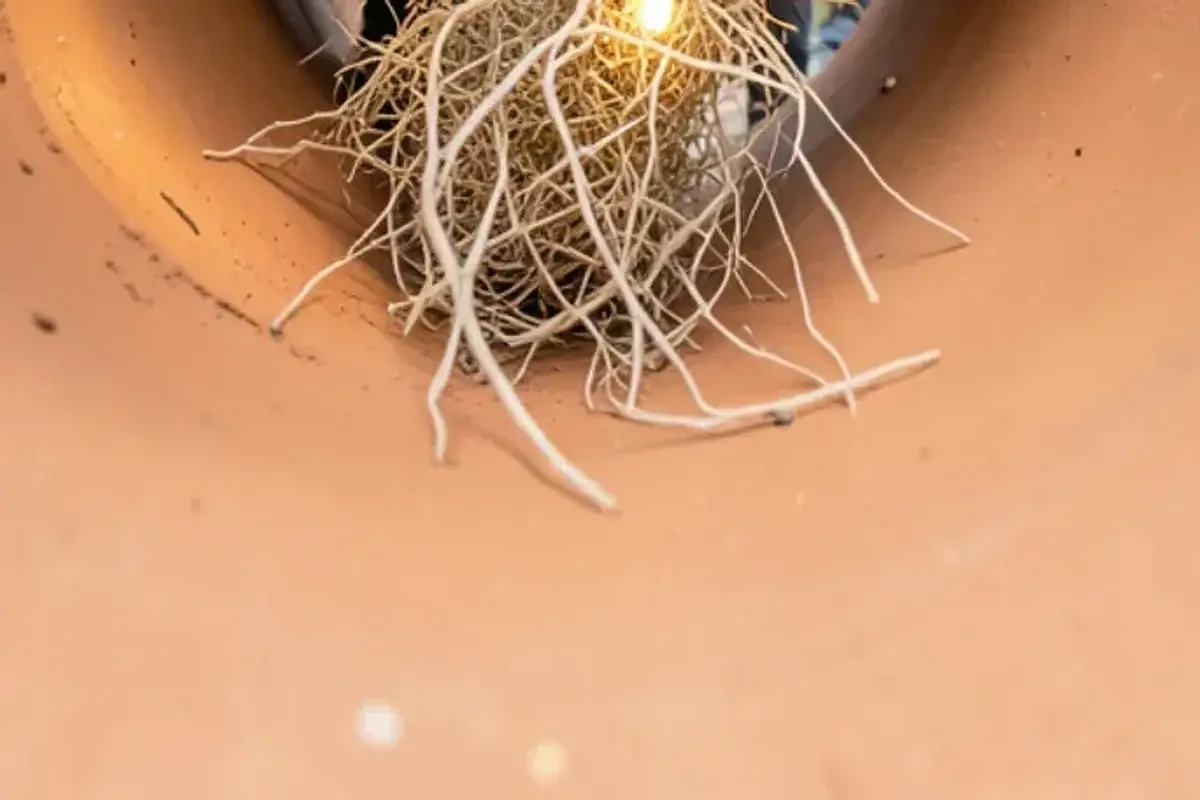
A sewer camera inspection turns a guess into a plan. The camera shows where the roots are, how much of the pipe they fill, and whether the pipe is still round. Ask the plumber to mark the location and the depth on the ground, and keep a copy of the footage.
Repeat that view after clearing. Roots can hide a crack, so judge the pipe once it is clean.
Tree roots in sewer line joints: reading the footage
Read the video for three things: how much of the pipe is blocked, where the roots come in, and what shape the pipe is in. Those answers set the fix. The word "roots" on an invoice tells you much less.
| What the video shows | What it usually means | Sensible next move |
|---|---|---|
| Fine hair at one joint | Early growth at a small gap | Clear it, then recheck on a set date |
| Thick mass filling the pipe | Years of growth at an open joint | Clear it, look again, price a lasting fix |
| Roots at joint after joint | The whole run is leaking | Compare a liner with replacement |
| Roots plus an oval or broken wall | The pipe has lost its shape | Plan repair or replacement |
| Roots at a fitting near the house | A connection has opened | Spot repair may be enough |
| Water standing past the roots | A low spot in the line | Fix the slope before any liner |
Write down the footage counter at each root point, and keep the file. The next pass can then be compared joint by joint, which shows whether growth is speeding up or a cleaning plan is working.
Which fix fits your line?
The right fix depends on the condition of the pipe. Here are the common options, with how long each tends to hold up:
| Fix | What it does | Lasting? | Best for |
|---|---|---|---|
| Mechanical cutting | Shears roots with a toothed head | Short term | Light growth, sound pipe |
| Hydro jetting | Scours roots and grease with high-pressure water | Short to medium term | Sound pipe after inspection |
| Cured-in-place liner | Forms a resin pipe inside the old one | Long term | Round pipe with leaking joints |
| Pipe bursting | Pulls new pipe through the old path | Long term | Failed pipe, no major sag |
| Section replacement | Digs out and replaces the bad pipe | Long term | One failed area |
| Full replacement | Replaces the run | Longest | Broken or sagging line |
Lining rules out cable machines later on, so jetting becomes the usual way to clean that pipe. A sagging line stays sagged if you only line it. If the pipe has cracked or collapsed, see sewer line repair for what comes next.
What to ask before you approve a fix
Five questions keep the quote honest, whichever method it names:
- Where do the roots enter, in feet from the cleanout?
- Is the pipe round, and does it hold a steady slope?
- Does the price cover one joint or the full run?
- What happens at the connection to the city main?
- How will this line be cleaned in the future?
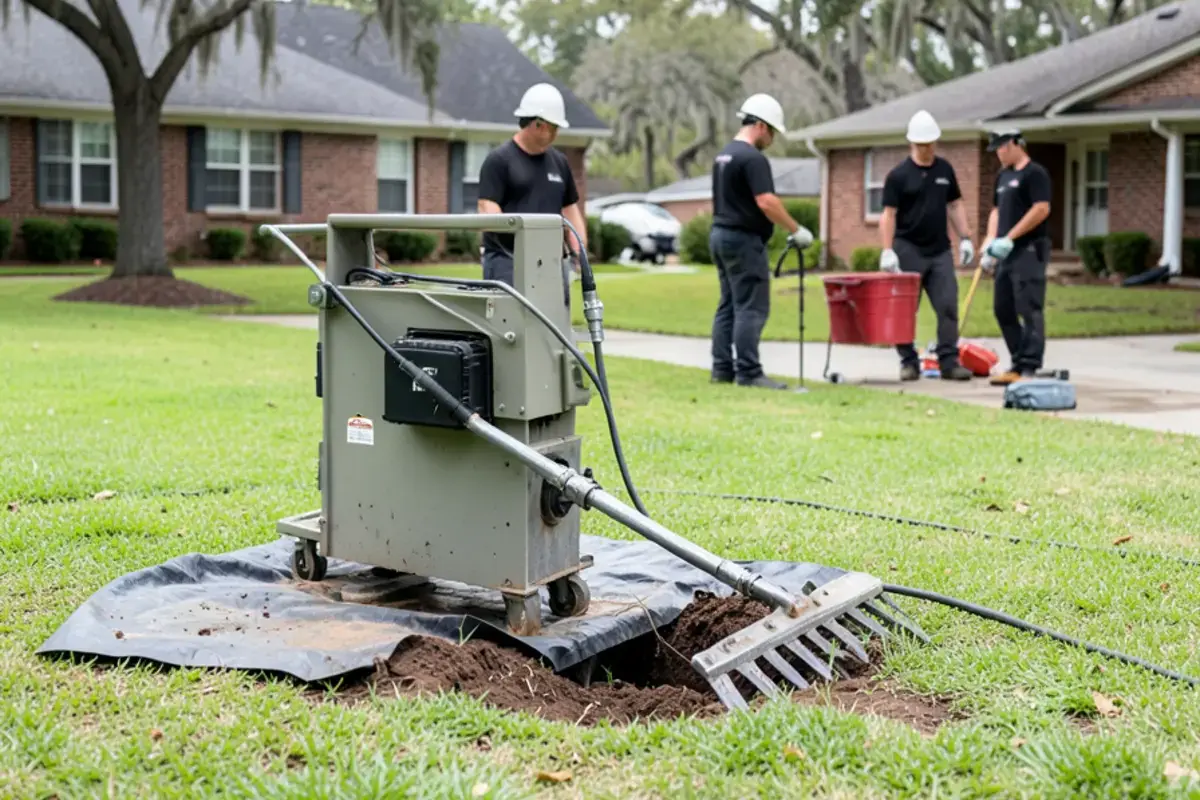
Routine sewer line cleaning can be a fair plan for a sound line with a known root point, as long as you know it is a maintenance cost and not a cure.
How our team thinks about trees near a sewer line
Treat the tree and the pipe as one problem. Our team's general advice:
- Find out where the line runs before you plant anything big near it.
- Keep new trees and large shrubs well away from the sewer path. Ask an arborist about spacing for the species.
- If a line needs cleaning for roots, ask how often, and write it down.
- Compare the yearly cost of cleaning with the one-time cost of a lasting fix.
- Get a camera view before you buy a house with big trees and an older line.
If the clearing interval keeps getting shorter, the pipe is probably opening up. That is the point to stop paying for cutting and start pricing repair.
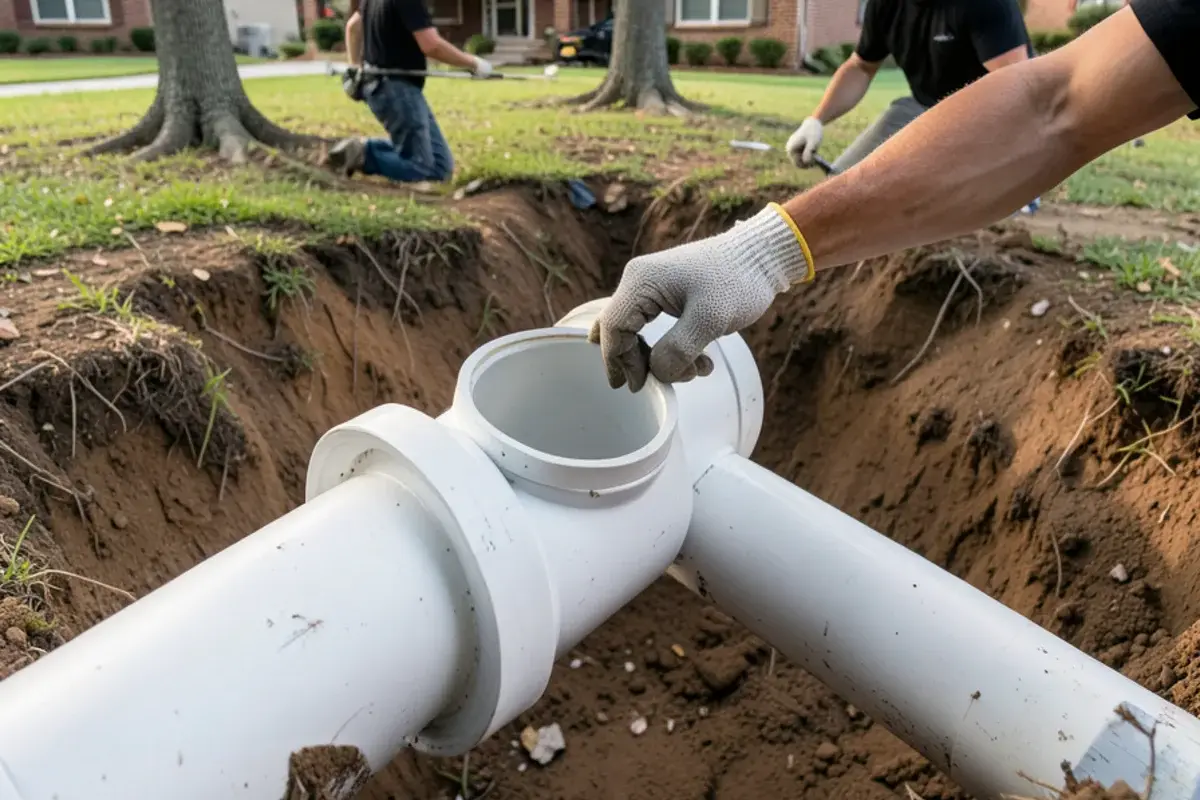
Digging has its own trade-off near a tree you want to keep. A trench through the root zone can do real harm, so a liner or pipe bursting may be worth a higher price when the line runs under the canopy. Have 811 mark gas and electric lines before anyone digs, and bring an arborist in before any large root gets cut.
Who is responsible for roots in the line?
The answer depends on where the roots are. Owners usually handle the private service line, and the utility handles the public main. A city tree or a neighbor's tree can complicate that, so check with your city's public works office before assuming anyone else will pay. In South Houston, that means the city's own departments and not the City of Houston's.
If the camera stops at a blockage past your property line, keep the footage and report it. In the City of Houston, that report goes to 311.
The takeaway for homeowners
A note on timing: roots rarely wait for a good moment, and a line that gurgles today can back up after the next heavy use. Book the camera while the drains still work.
Slow, repeating, house-wide drain trouble under big trees points to roots. Get a camera in the line, clear it, and look again. If the pipe is sound, schedule maintenance. If it is open or broken, fix the pipe. Roots stop being a problem once the water stops leaking out to feed them.
Common questions
Will copper sulfate or root killer solve the problem?
It may slow regrowth, but it will not fix the pipe. Products poured down a drain leave the opening in place, and dead roots still have to be cleared. Read the label, check local rules, and never use a root product in a line you have not inspected. A cracked or collapsed section needs repair.
Should I remove the tree?
Usually only as a last step. A healthy tree shades the house and may be worth more to you than a sewer section. Fix the pipe first, because sound pipe gives roots little reason to enter. Talk to an arborist before you cut any large roots, since that can harm a tree's health and stability.
Can tree roots get into PVC sewer pipe?
Yes, though it is far less common. The City of Traverse City notes that PVC resists roots better than clay tile because it has fewer joints. Glued joints leave little to enter. The weak spots are usually a transition to older pipe or a joint that clay soil has shifted, so a camera should check those connections first.
How often should a sewer line with roots be cleaned?
Let the footage set the schedule and not the calendar. A sound line with light growth at one joint can often go a good while between visits, while clay pipe with open joints may need it sooner. Note each date in a log. If the gap between cleanings keeps shrinking, stop cutting and price a repair.
Big tree and a slow main line? Call and ask about a camera inspection.
- ★ 5.0 on Google, 18 reviews
- Sun–Thu 7 AM–8 PM · Fri 7 AM–6 PM · Sat closed
- Clear, upfront quote
Written by the PipeElectric team
PipeElectric is a Houston plumbing company with 18 Google reviews and a 5.0 rating. Read about us.