
By the PipeElectric team · Published October 30, 2026 · Updated October 30, 2026
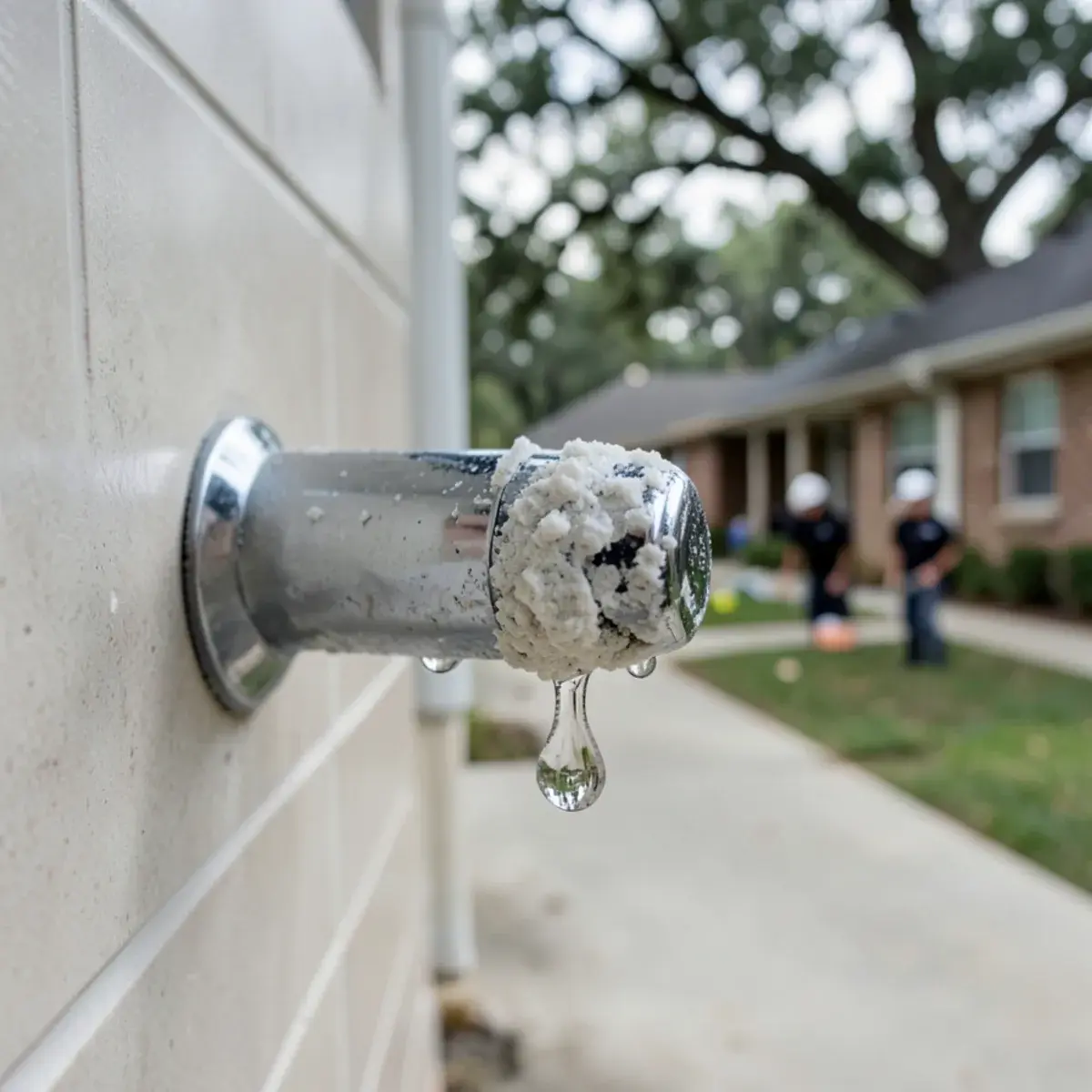
Hard water effects on plumbing come down to scale. Dissolved calcium and magnesium settle out as mineral deposits that narrow pipes, coat heating surfaces and wear down fixtures. Penn State Extension says scale can clog pipes and shorten a water heater's life. Heat speeds it up, so the hot side suffers most.
What is hard water, and how hard is yours?
Hard water contains high levels of dissolved calcium and magnesium. Penn State Extension uses this scale:
| Classification | Grains per gallon | Parts per million |
|---|---|---|
| Soft | Less than 1.0 | Less than 17 |
| Slightly hard | 1.0 to 3.5 | 17 to 60 |
| Moderately hard | 3.5 to 7.0 | 60 to 120 |
| Hard | 7.0 to 10.5 | 120 to 180 |
| Very hard | Above 10.5 | Above 180 |
Do not rely on a figure from a salesperson. Numbers quoted online for Houston vary widely, so get yours from your own supplier or a test. The EPA says a Consumer Confidence Report tells you about the drinking water in your area, and it offers a lookup tool for finding yours. The name on your water bill tells you whose report to read.
That point matters in Aldine, which is unincorporated, because your supplier may not be a city. Test strips from a hardware store give a quick second check at the tap.
How to read the number you find
Reports and test kits do not all speak the same unit. Most water reports list hardness in parts per million, and softener sellers quote grains per gallon. Divide parts per million by 17 to convert. A report showing 170 ppm means about 10 grains, which sits near the top of the hard band in the table above.
Hardness is a nuisance measure and not a health limit, so some reports bury it in a secondary table or leave it out. If yours does, call the supplier and ask. Test at a cold kitchen tap ahead of any softener or filter. Supply also changes the answer. A home on a well or a district well can test very differently from a house across the road on treated surface water.
Not sure how hard your water is? Call and ask what to test.
- ★ 5.0 on Google, 18 reviews
- Sun–Thu 7 AM–8 PM · Fri 7 AM–6 PM · Sat closed
- Clear, upfront quote
Hard water effects on plumbing pipes
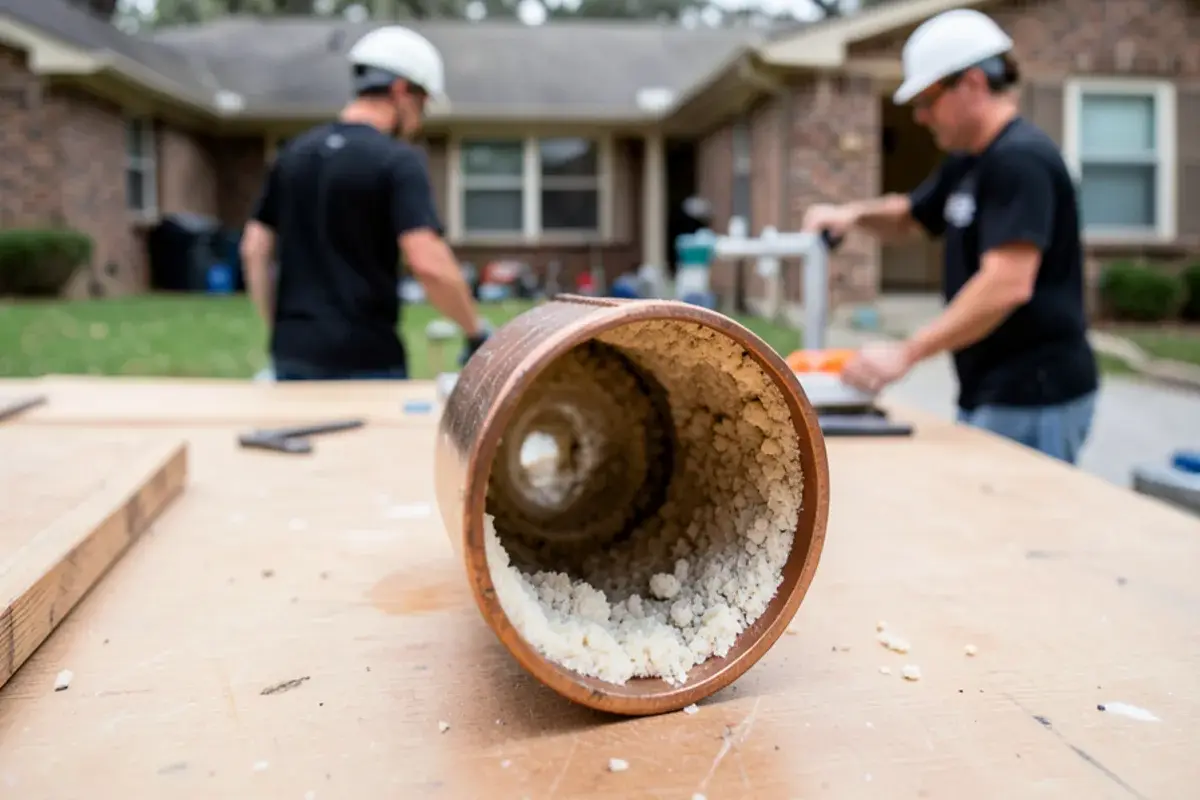
Scale narrows the pipe from the inside, slowly. Calcium carbonate is the main component of scale, and it forms deposits on pipe interiors that restrict flow, according to Wikipedia's hard water entry.
The effect is rarely sudden. You may see pressure drop at one fixture first, because small openings choke before big ones. Hot lines tend to scale up faster than cold, as heat drives minerals out of solution.
Older galvanized pipe has it worst, as its rough, corroded inner wall catches minerals. If pressure has fallen throughout an older house, scale may be only part of the story, and it is worth asking about the pipe itself.
What does scale do to a water heater?
The water heater takes the biggest hit. Heat is what makes scale form, so the bottom of a tank and the elements inside it collect minerals first.
- Sediment settles at the bottom and insulates water from the burner
- Electric elements get coated and may burn out sooner
- Popping or rumbling sounds come from water trapped under sediment
- Recovery gets slower, so hot water seems to run out sooner
- Tankless exchangers can block and shut down from overheating
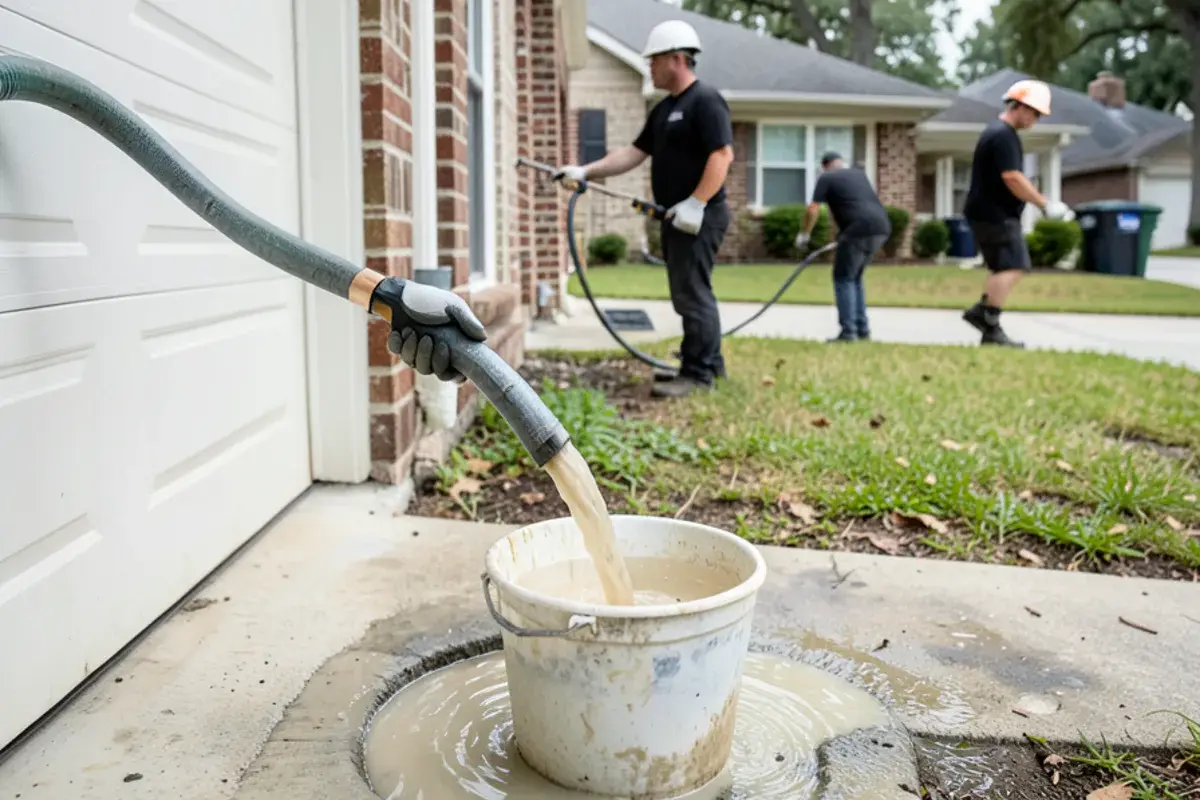
On tankless units, the narrow passages make this worse. Manufacturers commonly call for water testing, treatment, and yearly descaling through service valves. Wikipedia notes that scale deposits slow heat transfer and lower heating efficiency in boilers, and the same physics applies to a home heater.
A regular flush helps a tank. Our guide on no hot water covers the warning signs, and a water heater repair can often deal with a coated element or a stuck drain valve.
Is that crust scale or corrosion?
Check the color and try vinegar before you buy anything. Crust on a fixture can come from different problems, and only one of them is hardness:
| What you see | What it usually is | Quick test or next step |
|---|---|---|
| White or chalky crust | Hard water scale | Fizzes and softens in white vinegar |
| Blue-green stain | Copper corrosion | Ask about the pipe and the water's pH |
| Orange or brown stain | Rust from iron or steel pipe, or the tank | Run hot and cold apart to find the side |
| Black specks at the aerator | Failing rubber parts or sediment | Check the supply hoses and washers |
The color matters because a softener fixes only the first row. Blue-green or rust stains point to the pipe, and that repair is a different job.
Which fixtures and appliances show it first?
Look at the small openings. These are the early warning signs around the house:
- White crust on faucet aerators and shower heads
- Toilet fill valves that stick or run on
- Weak spray from shower heads
- Spots on glassware after the dishwasher
- Soap that will not lather and leaves film on skin
- Detergent residue in the washing machine
Soaking an aerator or shower head in white vinegar will clear most of the crust. Turn off the water and take photos of the parts before you remove them, so they go back the right way.
A yearly routine for scale
A short calendar beats a big repair. Here is a routine that fits most homes with hard water:
| When | Job | Why it helps |
|---|---|---|
| Monthly | Wipe faucet bases and check aerators | Small openings show scale first |
| Every few months | Soak shower heads | Keeps spray and pressure up |
| Yearly | Flush the tank | Clears sediment from the bottom |
| Yearly | Descale a tankless unit, as the manual directs | Protects the heat exchanger |
| Yearly | Service the softener and check its settings | Keeps treatment matched to your test |
| Every few years | Have the anode rod checked | Softened water can wear it faster |
Our team's advice on when a softener earns its keep
Decide from your test result and your symptoms. Our team's general advice is that a water softener makes the most sense when the number is high and you are already seeing the damage.
- Test first: hard or very hard water with visible scale is the clearest case.
- Protect the heater: a tankless unit benefits most, since it is so sensitive to scale.
- Plan for upkeep: a softener needs salt, and Penn State says the brine supply has to be maintained.
- Look at demand-control models: timed units regenerate on a schedule and can waste water and salt.
- Think about sodium: softening adds about 7.5 milligrams per quart for each grain removed, which matters on a low-sodium diet.
Softened water is not always what you want at every tap. Ask about keeping a cold line unsoftened at the kitchen sink. If taste or chlorine is the real complaint, look at water filtration instead.
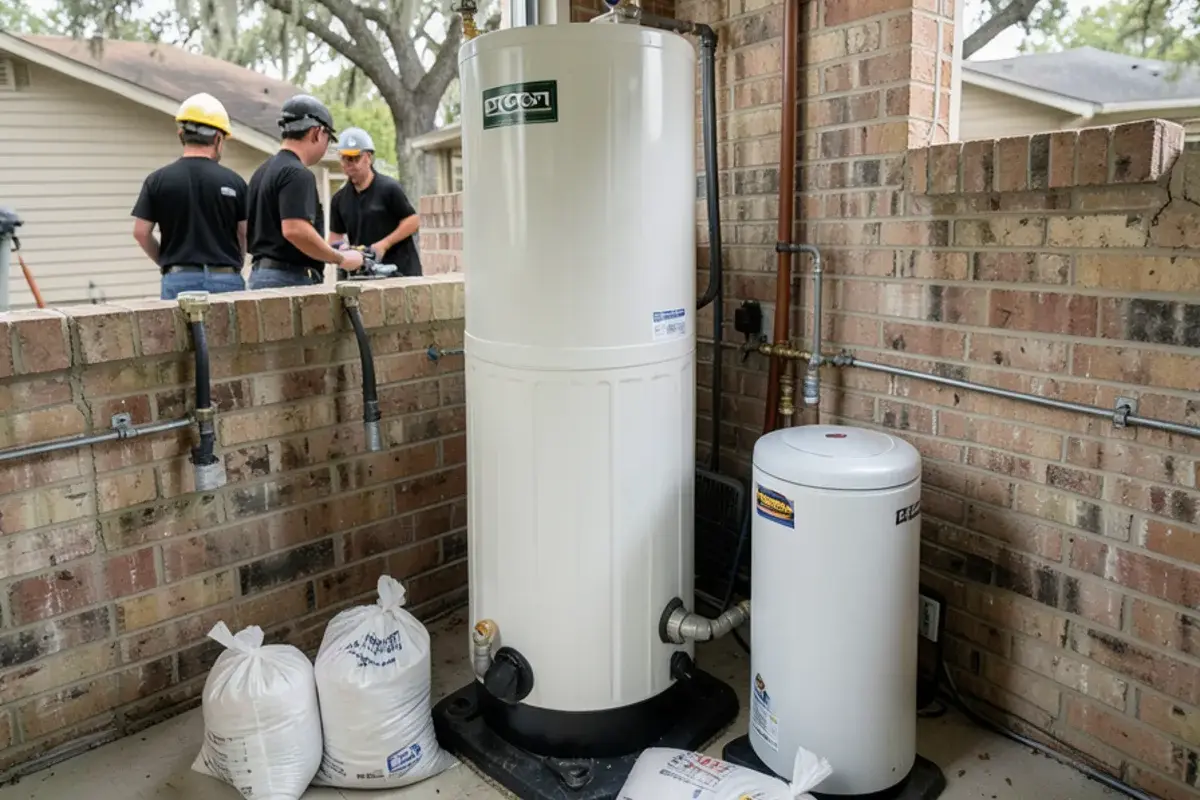
Be careful with magnets and other no-salt gadgets. Those devices do not take calcium and magnesium out of the water, so ask the seller for independent test results on scale before you spend money. Location matters as well. A softener needs a drain, a power outlet and a plumbing loop near where the main line enters, and a slab home may have that loop in the garage or nowhere at all.
What to do about hard water this month
Start small and work up. Find your hardness number, then clean an aerator to see how much scale is really there. Flush the water heater if it has not been done in a while.
If the numbers and the symptoms agree, talk to a plumber about treatment. Scale is slow and quiet, and it costs you a little every day. You will get a clear, upfront quote after a look at your setup.
Common questions
Does hard water cause pipes to leak?
Not usually on its own. Scale tends to restrict flow and not to eat through a pipe. Fittings, valves and flappers are more likely to fail, because minerals stop them from seating or moving properly. If an older house has repeat pinhole leaks, ask a plumber to check the pipe and the water pressure, since other causes are likely.
Does hard water damage PEX or plastic pipe?
Scale can still form inside plastic pipe, though it tends to matter most at fittings, valves and fixtures where the opening is small. Plastic does not corrode the way older metal pipe can. The heater and the fixtures remain the main concern, so a house with new pipe can still have hard water trouble.
Does a softener remove everything from the water?
No. Penn State Extension notes that softeners do not necessarily remove serious drinking water contaminants. They mainly handle calcium and magnesium. If you are worried about taste, chlorine or specific contaminants, test the water and look at filtration, which is a separate step from softening and addresses different things.
How do I know if my Houston water is hard without a test kit?
You can get a fair idea from your supplier's yearly water report, which you can request by name from the company on your bill. Around the house, look for white crust on shower heads, spots on glasses and soap that will not lather. Those signs show that minerals are present, but only a number tells you how much to treat.
White crust on every faucet? Call and talk through what your water needs.
- ★ 5.0 on Google, 18 reviews
- Sun–Thu 7 AM–8 PM · Fri 7 AM–6 PM · Sat closed
- Clear, upfront quote
Written by the PipeElectric team
PipeElectric is a Houston plumbing company with 18 Google reviews and a 5.0 rating. Read about us.