
By the PipeElectric team · Published October 30, 2026 · Updated October 30, 2026
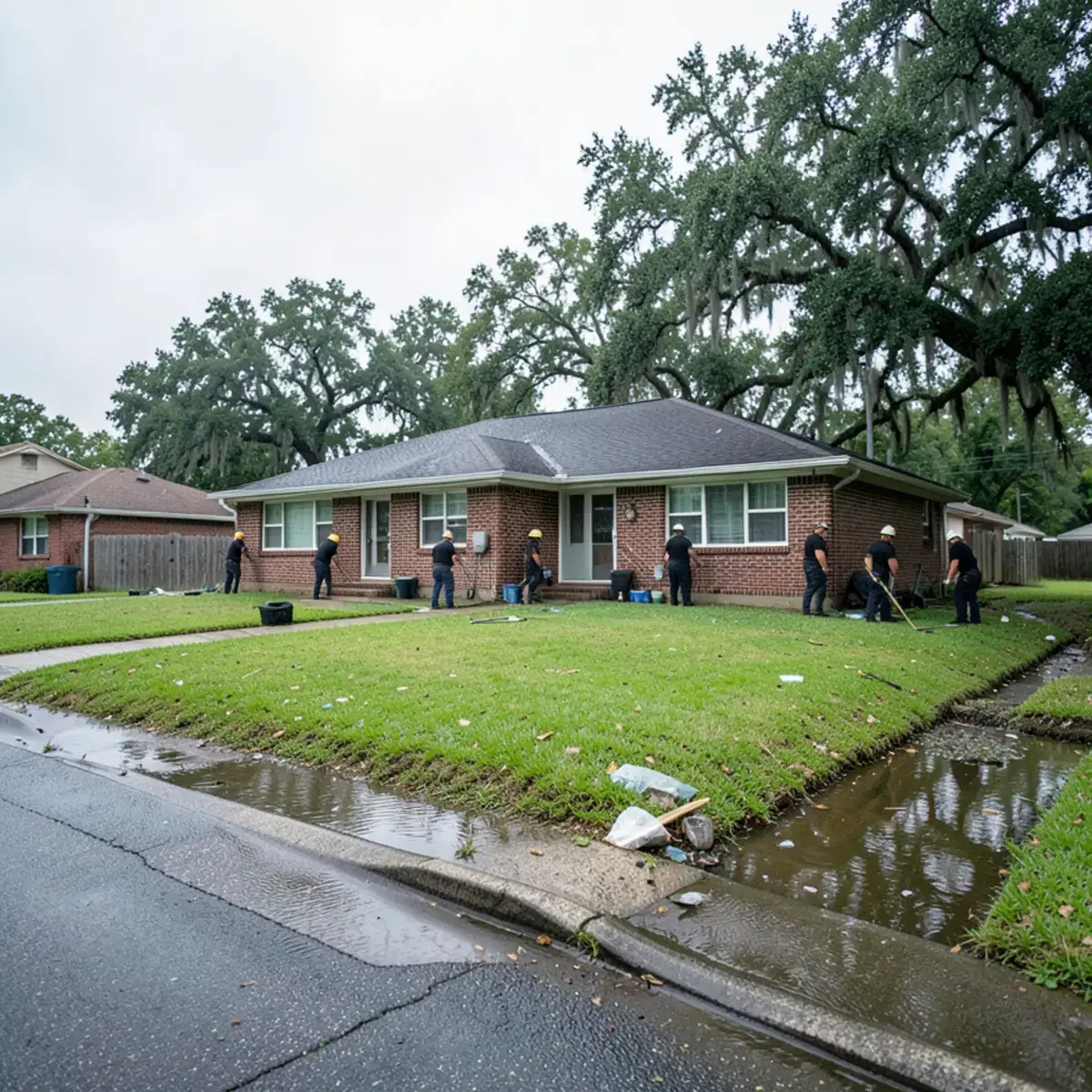
Plumbing after a flood in Houston starts with three safety checks: keep clear of wet electrical gear, ask your water utility whether the tap is safe, and treat floodwater as contaminated. Only then move to toilets, drains, the water heater and gas appliances. This guide runs in that order, from the days before landfall through the first week.
What should you do before the storm arrives?
Prepare the plumbing in the last calm days, when stores are open and the job is easy. Work down this list:
- Locate the main shut-off valve and make sure it turns
- Find the gas meter and the shut-off near each gas appliance
- Store at least 1 gallon of water per person per day for 3 days, as the CDC advises
- Photograph the water heater, cleanouts and any equipment for your records
- Ask about backflow valves or plugs for drains and toilets, which the CDC recommends for keeping floodwater out
- Test your generator setup and plan to run it at least 20 feet from openings, per Ready.gov
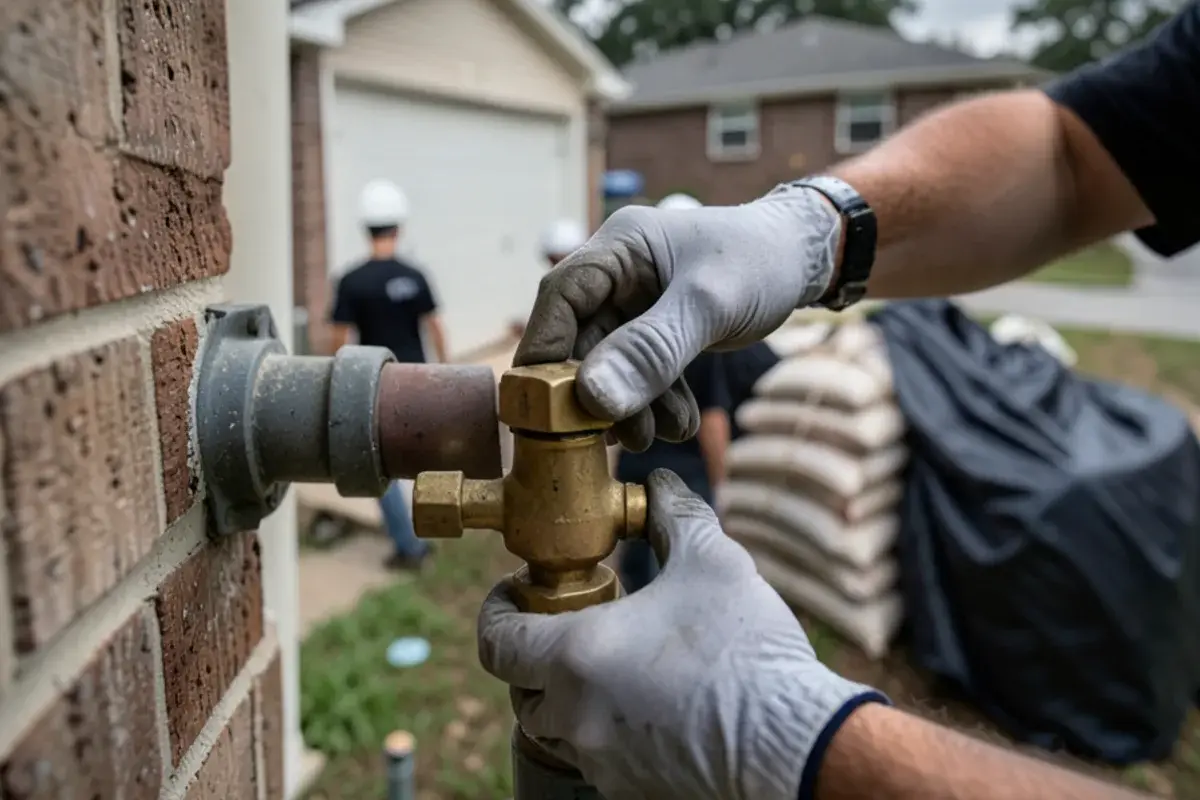
Elevation is the long-term fix. FEMA's coastal building guide calls raising utilities and mechanical equipment the preferred method of protection. That matters most on your next replacement, when a heater can go on a higher platform or a different level.
Water in the house and sewage in the mix? Shut the power off first and call.
- ★ 5.0 on Google, 18 reviews
- Sun–Thu 7 AM–8 PM · Fri 7 AM–6 PM · Sat closed
- Clear, upfront quote
What is safe in the first hours after the water rises?
Very little, so protect people before pipes. Ready.gov and the CDC agree on these points:
- Stay out of floodwater. It can carry pathogens, chemicals, debris and wildlife.
- Do not touch wet electrical equipment or stand in water to reach it.
- Shut off power at the main breaker only if you can do it safely.
- Return home only when local officials say it is safe.
- Keep children out of cleanup work.
If you smell gas, leave the building and call 911 or your gas utility from outside. Do not try to find the source.
Plumbing after a flood in Houston: what do you check, and in what order?
Check the systems in this order once officials clear your return and the power is off or confirmed safe:
| Order | Item | What to look for | Who handles it |
|---|---|---|---|
| 1 | Tap water | Boil notice from your utility | You, by checking the notice |
| 2 | Toilets and drains | Slow flush, gurgling, sewage odor | Plumber if anything backs up |
| 3 | Water heater | Waterline on jacket, wet burner or controls | Qualified technician |
| 4 | Gas appliances | Wet controls, shifted lines, odor | Gas utility or plumber |
| 5 | Supply lines | Meter moving with all fixtures off | Plumber |
| 6 | Outdoor equipment | Sprinkler valves, backflow device, pool lines | Plumber or irrigator |
A moving meter after a storm points to a broken line, often underground. Shut the main valve and get it traced. For sewage in the house, the steps on emergency sewer backup cover what to do while you wait.
Should a flooded water heater be replaced?
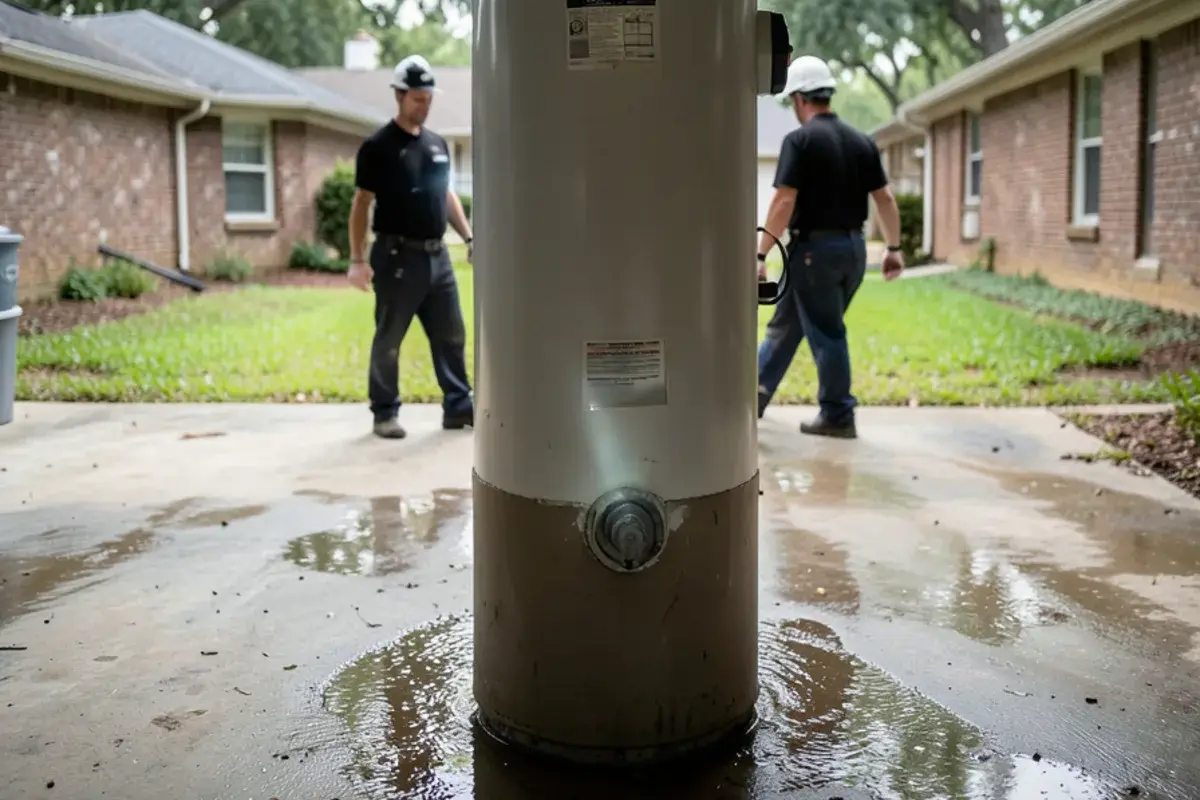
Plan on it if floodwater reached the unit. NC State Extension says flooded water heaters, gas and electric, should be replaced, and it warns that controls clog when flooded in contaminated water. The insulation inside the jacket stays wet, so a tank that looks dry from outside tells you little. Tankless units carry control boards that fare no better. Photograph the data label and the waterline before anything is hauled away.
Why do Houston storms overwhelm home plumbing?
Houston storms overwhelm home plumbing because the water has few places to go. Hurricane Harvey dropped more than 40 inches over four days across many areas in 2017, according to Wikipedia's account of the storm. Drains and sewers cannot move that volume, so water and sewage take the lowest open path, which may be your tub or floor drain.
Location adds to it. Sugar Land's south and southwest sections developed along the Brazos River, and the area's land has sunk over the decades, which Wikipedia's city entry links to worse flooding during Harvey. A home in Sugar Land or nearby Katy can flood from rain alone, well away from any coast.
Wind has its own plumbing cost. Hurricane Beryl cut power to about 2.2 million CenterPoint customers in July 2024. Sump pumps stop, tankless water heaters stop, and any pump-based sewer system at the property stops with them.
What should you do during a long power outage?
Cut your drain use and protect what depends on power. Houston's sewer system relies on about 390 lift stations, Circle of Blue reported in 2019, and those stations need electricity to push sewage onward. If your utility asks you to limit water use, do it, even if the taps still run.
At the house, the effects differ by equipment:
- Tankless heater: expect cold water until power returns.
- Standing-pilot gas tank: it usually keeps working, though a power-vent model will stop.
- Grinder or sewage pump: hold off on water use, because the basin can fill and back up.
- Well pump: fill containers before the storm, since the tap stops with the power.
Is your water safe to use after a flood?
Treat it as unsafe until your utility says otherwise. EPA gives these rules:
- Check with your water utility or health department for a boil advisory.
- If told to boil, bring water to a rolling boil for one full minute.
- On a private well, do not turn on the pump, because of the shock risk.
- Do not drink or wash with well water until a test confirms it is safe.
- Hold off on septic use until water in the absorption field drops below the water level around the house.
After a long outage, run cold taps for a few minutes once the notice lifts. Follow any flushing steps your utility publishes, since they may differ by system.
Can floodwater get into your water lines?
Yes, when pressure drops and an opening sits under water. A broken line, a hose left in a flooded yard or a submerged sprinkler can let dirty water in if line pressure falls below the pressure outside. Disconnect hoses before the storm for that reason. Once a boil notice lifts, finish the job:
- Throw out ice made during the notice
- Change the refrigerator filter and any under-sink cartridge
- Rinse the faucet aerators
- Ask a plumber about the water heater if the house lost pressure for long
What order does our team suggest for repairs?
Our team's advice is to fix what stops the house from being safe, then what stops it from drying. Sewage and gas come first. Supply leaks come next, because you need clean water for cleanup. Water heater replacement can follow once the area is dry and disinfected.
Do not rush to close walls. Wet insulation and drywall hide leaks, and EPA advises discarding items wet for more than 24 to 48 hours. Pressure test the supply lines while the walls are open. It is the cheapest moment to find a problem you would otherwise pay to reopen.
What paperwork should you keep?
Keep a dated record from the first day. Ready.gov tells storm victims to photograph damage and contact their insurer. Save photos of the waterline, every appliance label and every receipt. Only about 15 percent of Harris County homes had federal flood coverage when Harvey hit, so check your own policy before the next season. Read how backup and flood coverage differ before you file.
A flood rarely breaks one thing. Take the list in order, and call for plumbing repair on anything that fails the check. Ask for a clear, upfront quote for each item so you can sort urgent work from work that can wait for the adjuster. If the heater is lost, water heater installation covers your replacement options, including a higher location.
Common questions
Can I flush the toilet after a flood?
Hold off until you know the sewer is working. If the street is still flooded or drains are gurgling, flushing can push waste back into the house. Test with a small amount of water once floodwater has dropped. On a septic system, EPA says not to use it until water in the absorption field drops below the water level around the house.
Do I need a new water heater after a flood?
Often yes, if water reached the burner, controls or electrical parts. Do not relight or re-energize a heater that sat in floodwater. Have a qualified person inspect it first, because hidden damage to gas controls or wiring is a safety risk. Tanks that stayed above the waterline may only need a check and a flush.
Should I turn off my water before a hurricane?
Yes, if you are leaving. Close the main shut-off valve and turn off the water heater, so a line break cannot run for days while you are gone. If you are staying, leave it on and fill containers, since a Houston neighborhood can lose pressure after a storm. Find the valve before the wind arrives, because a flooded meter box is hard to reach.
Can a flood damage a buried sewer line?
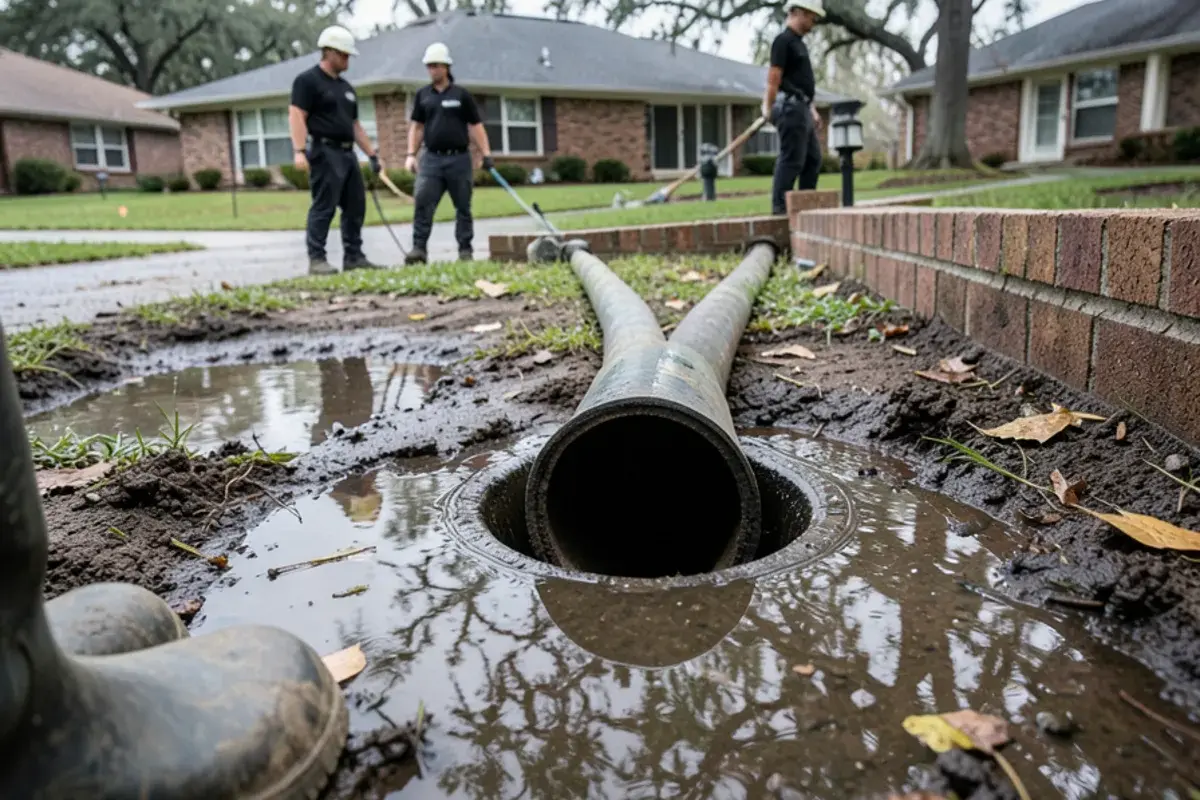
Yes. Soil around a buried line can wash out or settle as the water drops, and the pipe can shift or break, especially at older joints in clay. Slow drains or a sewer smell that lingers after the street dries are the usual signs. A camera run after the flood shows whether the line kept its shape and slope.
Flood water reached your plumbing? Call and describe what got wet.
- ★ 5.0 on Google, 18 reviews
- Sun–Thu 7 AM–8 PM · Fri 7 AM–6 PM · Sat closed
- Clear, upfront quote
Written by the PipeElectric team
PipeElectric is a Houston plumbing company with 18 Google reviews and a 5.0 rating. Read about us.
Sources
- Ready.gov: Floods
- Ready.gov: Hurricanes
- Ready.gov: Power Outages
- CDC: Flood safety
- EPA: Flooding
- FEMA 499 Home Builder's Guide, Fact Sheet 29: Protecting Utilities (hosted by Louisiana DENR)
- Wikipedia: Hurricane Harvey
- Wikipedia: Hurricane Beryl
- Wikipedia: Sugar Land, Texas
- NC State Extension: How to Salvage Flood-Damaged Appliances (reviewed March 2024)
- Circle of Blue: Houston sewer consent decree (September 2019)